A trekker's honest guide to the most breathtaking panoramas in the Himalayas
Region
Langtang, Bagmati Province
Elevation
1400 m- 5000 m
Best Season
Oct-Nov/ Mar-May
There is something about Langtang that gets under your skin. I have been to a few Himalayan regions now, Annapurna, Everest Base Camp, Manaslu, but Langtang still surprises me. It is quieter and more raw. Actually, it is the kind of place where you walk for hours, look up, and genuinely forget what you were worrying about back home.
In this blog, I will tell you about the best viewpoints in the Langtang trek region based on my personal experience. I will share about the spots where the mountains open up, the clouds part, and you realize you have never actually seen the sky so clearly. Some of these are famous, while a few are not. Still, all of them are worth the climb.
I spent more than a week trekking through this region, and trust me, the experience is magical. These are places I stood in, breathed in, and did not want to leave. This piece of information will definitely help you plan a better journey in the Langtang Region Nepal.
Table of Contents
Why Langtang Region as your next destination?
The Langtang Valley trek is often called the closest Himalayan trek to Kathmandu, and that is true. You can reach the trailhead at Syabrubesi in about 7-8 hours by jeep or bus from the capital. But this closeness is not what makes it special.
What makes it special is the view-to-effort ratio. Nowhere else in Nepal will you get Himalayan panoramas this dramatic for a relatively short walk. Actually, the mountains feel close here, that is almost uncomfortably close. Langtang Lirung at 7,227 meters towers over the valley like a wall of ice and rock. On clear mornings, you can see the glacier from your teahouse window. The scenario is just unbelievable, you will live it up the moment here.
You may not know this, but the 2015 earthquake changed this region deeply. The village of Langtang itself was destroyed. But the communities rebuilt with extraordinary courage, and trekking here now directly supports local families. That means something extra on top of all the scenery.
The Best Viewpoints in Langtang Region
Here are some of the best Langtang viewpoints that offer an unforgettable experience in this region:
1. Kyanjin Ri (4,773 m) - The Classic Summit View
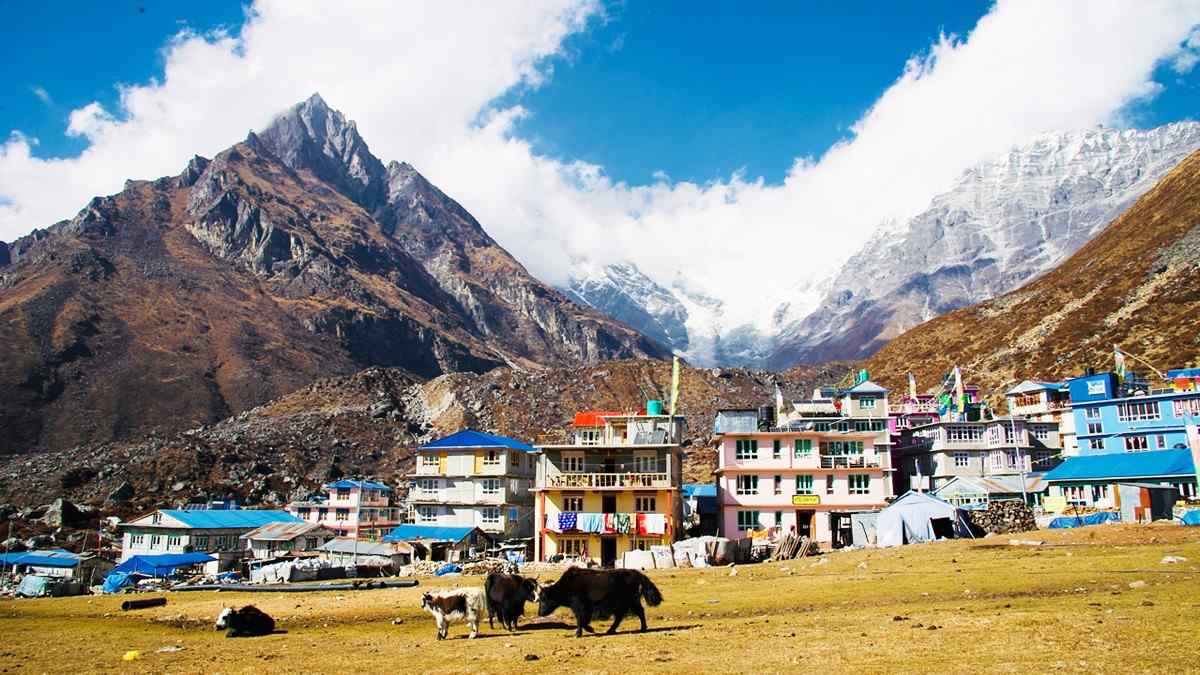
Stunning local lifestyle in Kyanjin Gompa area
If you only have time for one high point in Langtang, just go up Kyanjin Ri. It’s a full stop.
The climb starts early, so most trekkers leave their lodges in Kyanjin Gompa at 4 AM with headlamps on. Further, the trail is steep and rocky, especially in the dark. Your legs will burn. But the moment you reach the ridge as the sun begins to turn Langtang Lirung orange and pink, you will forget the suffering completely.
From the summit, the panorama is overwhelming. Langtang Lirung fills the north. There, I saw Gang Chhenpo rise to the east. Similarly, Naya Kanga, Dorje Lakpa, and Pemthang Karpo Ri complete the circle. You are standing inside a ring of giants, and the valley below looks like a toy village from up there. Isn’t this amazing? You will surely love it.
For the fit trekkers, it can be made up in 2.5-3 hours from Kyanjin Gompa. It is better to take warm layers. The wind at the top can be brutal even on sunny October mornings. So, you have to be careful about this preparation.
Elevation
4773 m
hike Time
2.5 – 3.5 hours from Kyanjin Gompa
Best For
360° Himalayan panorama, sunrise photography
Difficulty
Moderate to strenuous (altitude makes it harder)
2. Tsergo Ri (4,984m) - Langtang's Hidden High Point
Not as many people climb Tsergo Ri. That is honestly part of its appeal.
Located northeast of Kyanjin Gompa, this peak sits just under the 5,000 meter mark and demands a full day from most hikers. The ascent takes you through yak grazing fields, across rocky scree, and finally up a sharp ridge that feels slightly exposed near the top. Nothing technical, no ropes or crampons needed in normal conditions, but you will want solid trekking boots and a good night of acclimatization before attempting it.
So, what is the reward? There, I saw the finest mountain view in the entire Langtang National Park. From Tsergo Ri, I saw well into Tibet to the north, with the peaks of the Jugal Himal stretching across the eastern horizon. Yes, Langtang Lirung is so close it feels almost threatening. On a crystal-clear autumn day, the silence up here is absolute, just wind, prayer flags, and an ocean of white summits. Literally creating a heavenly pleasure.
Kyanjin Gompa to Tsergo Ri Hike is a must-try journey here, but this requires good planning. Altitude sickness is a real concern on this climb. I advise you to spend at least two nights in Kyanjin Gompa before attempting Tsergo Ri. Also, pay attention to drinking water and march slowly.
3. Langshisa Kharka (4,100m) - The Valley Walk That Delivers
Most trekkers stop at Kyanjin Gompa, so they miss Langshisa entirely. And I completely understand why the side trail looks unmarked. The morning was cold when I left, and my friends were not particularly enthusiastic.
But Langshisa Kharka turned out to be one of my favorite hours of the entire trip.
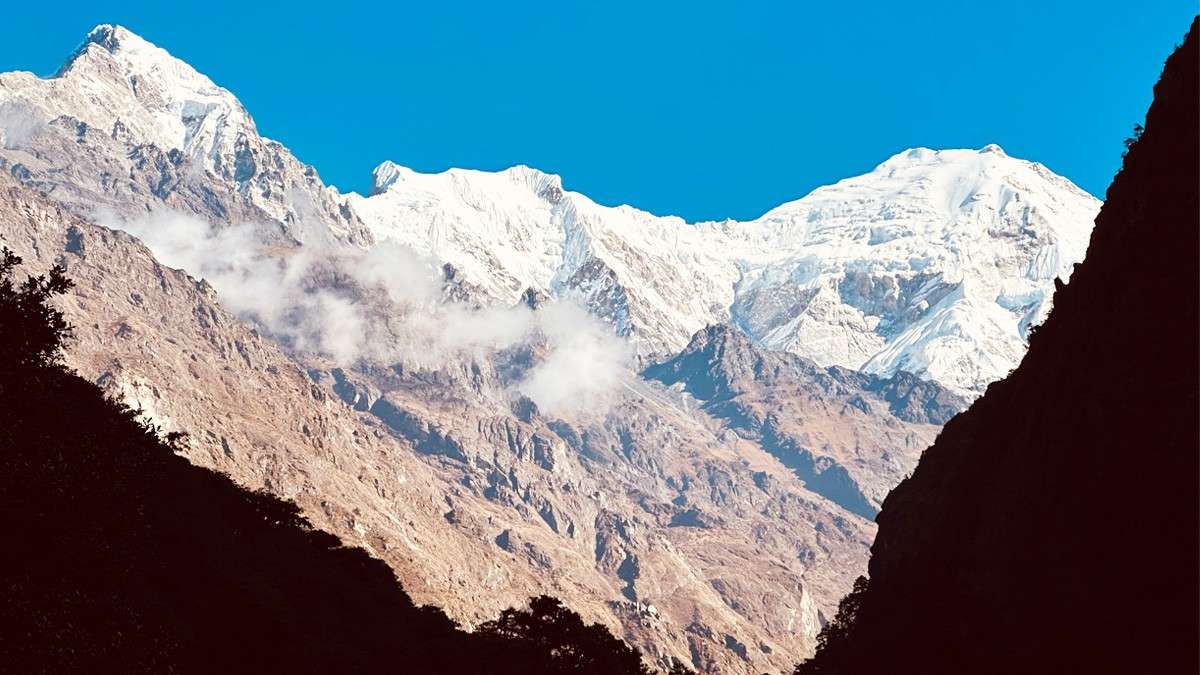
Langtang Mountain View during the valley walk
This high pasture sits about three hours east of Kyanjin Gompa along the upper valley. Not just that, the path stays relatively flat, following the Langtang River through increasingly dramatic terrain. I saw there, the glaciers getting bigger. Similarly, the mountains got closer.
By the time you reach the kharka itself, a wide, open grazing meadow, you are surrounded by high glacier walls on three sides, with Langtang Lirung's north face reflected in meltwater pools nearby.
There were no teahouses, so it is better to bring lunch. You may also need a warm jacket and a sense of stillness. The spot is especially magical in late afternoon when the light turns golden on the ice faces above.
4. Laurebina Pass (4,609m) - Gateway Between Two Worlds
The Helambu-Langtang circuit crosses Laurebina Pass, and this high saddle offers one of the most dramatic high altitude panoramas in Nepal.
Standing on the pass, you look north into the Langtang massif and south across rolling Helambu ridges that eventually blur into the haze above Kathmandu. Likewise, the contrast is just remarkable here. One side feels like the top of the world. While the other looks almost gentle by comparison.
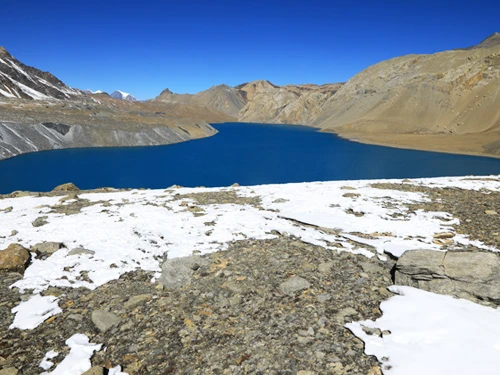
The route from Gopte up to Laurebina Lake and then the pass itself takes most trekkers about 5-6 hours in total. Snow is common even in October, so check conditions before heading up. Further, the frozen lake near the pass has a silent, otherworldly quality that is very hard to describe in words. I went completely blind in the beauty of the place.
This crossing is best done as part of the full circuit rather than as a day trip. The area around Phedi and Thadepati Ridge on the Helambu side also offers stunning Himalayan views at sunrise.
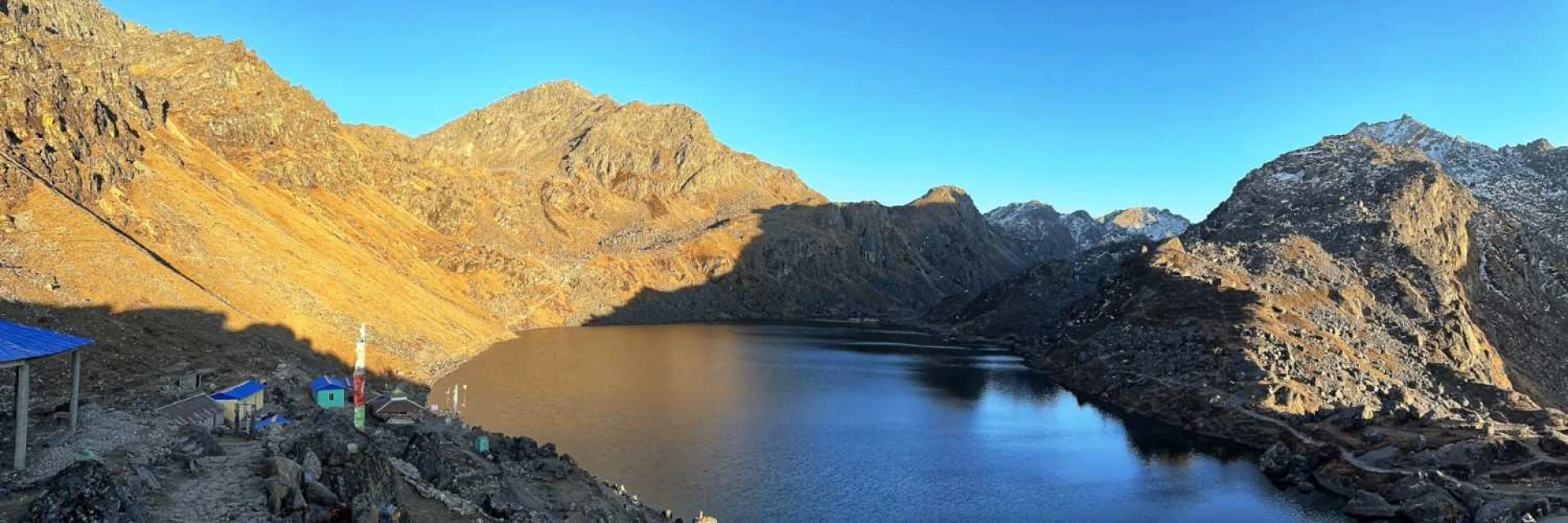
5. Gosainkunda Lake (4,380m) -Sacred Waters and Sacred Views
Gosainkunda is one of those places that hits differently than you expect.
This sacred lake sits in an open bowl at 4,380 meters, ringed by prayer flags and small stone shrines. Hindu pilgrims climb here every year during Janai Purnima, the full moon festival in August. They believe in a holy bath in the water and make offerings to Lord Shiva during this full moon time. So, there can be tens of thousands of people on a single weekend. I visited in October when it was almost empty, just a few other trekkers and the wind.
The views from above the lake, particularly from the ridge north of Gosainkunda and the higher Bhairav Kunda lake areas, are genuinely stunning. You will see there, Ganesh Himal, Langtang Lirung, and the Jugal peaks. All these appear on the horizon. The high plateau around the lakes feels remote and ancient in a way that the more trodden Langtang Valley sometimes does not.
Let me tell you, getting here from Dunche or Sing Gompa takes 2-3 days. The trail passes through beautiful rhododendron and oak forests before breaking into the high alpine zone. Similarly, the teahouses at Gosainkunda are basic but warm. The daal bhat is good, and the stars at night are ridiculous. This will definitely give a lifetime of memories.
6. Thulo Syabru Ridge (2,210m) - The Underrated Low-Altitude Gem
You do not always need to climb high to see something extraordinary.
Thulo Syabru is a village perched on a long ridge above the Langtang River valley. Most trekkers pass through it quickly on the way to or from the main route. But if you stop here for a night, or better, get up before dawn, you will see a mountain spectacle that rivals spots twice the altitude.
The ridge faces east, and at sunrise, the peaks of Langtang Lirung, Gang Chhenpo, and the snow-covered ridges behind Kyanjin Gompa catch the first light while the valley below stays dark. It is one of those views where you grab your camera and then realize no photograph will ever capture it properly.
This is also an excellent acclimatization viewpoint for trekkers who have just arrived and are not yet ready for high elevation climbs. The village itself has friendly teahouses, decent wifi in most places, and a bakery that makes surprisingly good apple pie.
7. Naya Kanga Base (5,000 m+) - For the Adventurous Trekker
Naya Kanga is a trekking peak at 5,846 meters, and even reaching its base camp offers views that are genuinely world-class.
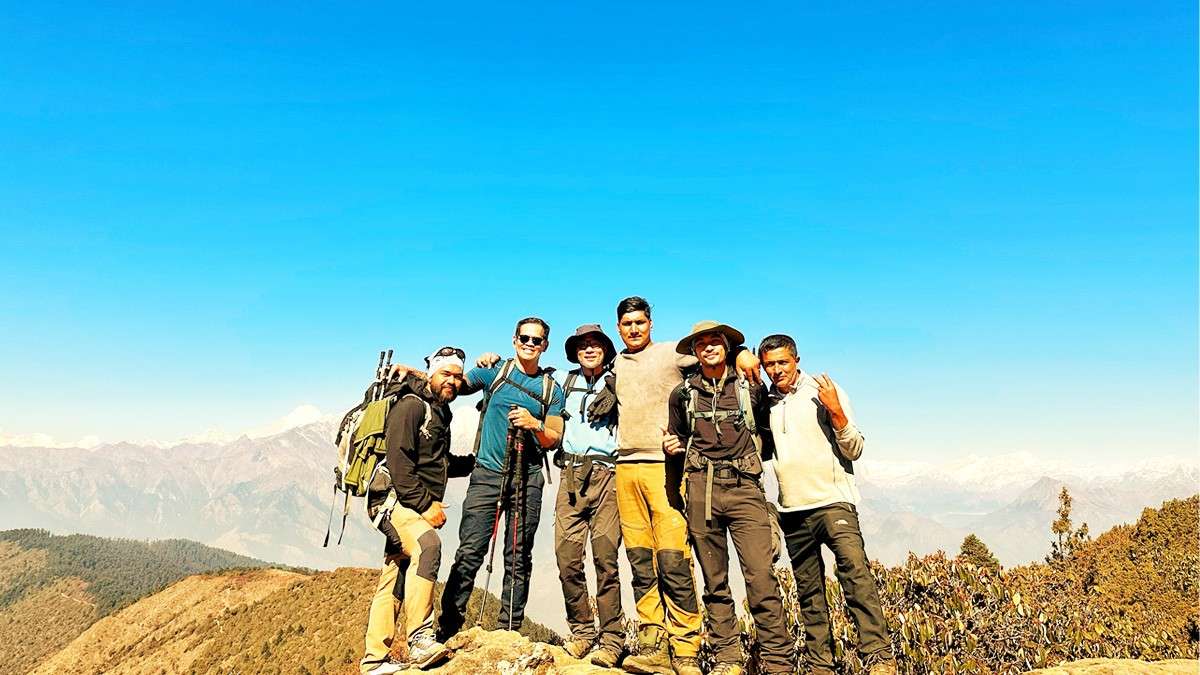
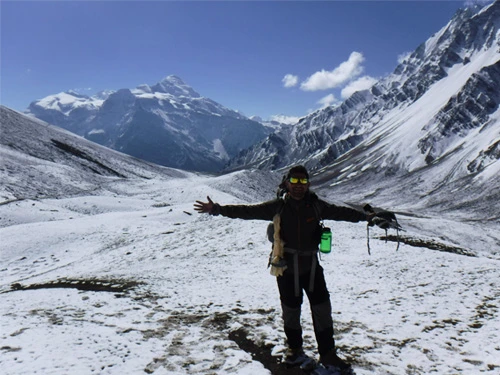
Trekkers cherising the moment on Langtang Valley Trek
The approach heads northwest from Kyanjin Gompa through a high rocky moraine. Glaciers surround you almost immediately. The mountain itself looms above, a clean triangular summit that is one of the more beautiful shapes in the whole Langtang area trek. Looking back down the valley from above 5,000 meters, with Kyanjin Gompa as a tiny cluster of roofs far below, gives you a real sense of the scale of this landscape.
You do not need mountaineering experience to reach the base. But you absolutely need proper altitude acclimatization, warm gear, and ideally a guide who knows the terrain. The glacier margins shift every season, and what was a safe route previously may look different today.
Things to Consider for Planning Your Langtang Trek
Certain things are there to keep in mind while making a plan for this trip. With a proper plan and preparation, the journeywill be smooth and satisfying.
Permits Required for Langtang
You need two documents to trek here. First, a TIMS card (Trekkers Information Management System), available through registered trekking agencies or the Nepal Tourism Board offices in Kathmandu.
Second, a Langtang National Park entry permit, currently priced at NPR 1500 for SAARC nationals and NPR 3,000 for foreigners (around USD 20-22). Prices change occasionally; verify current rates before you go.
Both can be sorted in Kathmandu at the Nepal Tourism Board office near Pradarshani Marg. You should carry passport photos. The whole process takes about an hour only.
Best Time to Visit for Mountain Views
October and November (Autumn) are the gold standard for this trek. The monsoon ends in late September, the air scrubs clean, and the sky turns a shade of blue that simply does not exist at lower elevations. Similarly, the visibility on clear days can exceed 150 kilometers. You will see peaks in Tibet from the high viewpoints.
March through May (spring) is the second-best window. The rhododendrons bloom in the lower forests, masses of red, pink, and white blossoms against white peaks, and the high passes are mostly snow-free by late April. The mornings will be clear, while afternoons can sometimes be cloudy.
Avoid December through February unless you specifically want snow trekking. The passes become difficult, and many teahouses remain closed. At this time, the views can be spectacular, but the cold is serious. Similarly, July and August bring the full monsoon, trails are muddy, leeches are everywhere, and the mountains hide behind thick clouds for weeks at a time.
What to Pack for High Viewpoints
Packing actually matters a lot in this Himalayan journey. I am going to keep this practical rather than exhaustive. For the high viewpoints like Kyanjin Ri and Tsergo Ri, the key items are:
Down jacket and a windproof outer layer - On the route, the temperatures at 4,500m+ in October can drop to -10°C before dawn. So this packing definitely helps.
Trekking poles - You can pack these poles to stand strong in the descents, which are knee-heavy.
Headlamp with fresh batteries -Carry these to start the journey early in the morning. Here, early starts mean pre-dawn hiking.
Layers you can remove- Try this, it will literally help you warm up fast once the sun is fully up.
High-SPF sunscreen - This helps you deal with UV radiation at altitude, which is genuinely dangerous and gets underestimated constantly
Water purification tablets or a filter - Even though the streams on the route are generally clean, you have to be aware of water purification.
Altitude Sickness: An Honest Warning
Acute Mountain Sickness (AMS) is real, and it does not care how fit you are. I met a marathon runner in Kyanjin Gompa who could barely stand due to a splitting headache and nausea. She had come up too fast.
So, my standard advice for you is: Do not ascend more than 500 meters of sleeping altitude per day above 3,000 meters. Take acclimatization rest days, Kyanjin Gompa is an ideal place for this. Kindly drink three to four liters of water daily. If your headache worsens, you feel confused, or you cannot walk straight, descend immediately. These are not symptoms to push through. Following these simple tips, will help you deal with Langtang trek Difficulty.
Diamox (acetazolamide) is commonly used by trekkers, and this can help. Talk to a doctor before your trip about the right dose. Many travel clinics in Kathmandu's Thamel area are familiar with altitude trekking and can advise.
Final Thought
People often ask me which is better, Langtang or Everest Base Camp? I always refuse to answer that directly because they are entirely different experiences.
Everest is a modern-day pilgrimage for trekkers. The trail is busy, the lodges are well-developed, and there is a certain electricity in being part of that stream of people all heading toward the same famous objective. Whereas Langtang is something quieter. The mountain views are arguably just as dramatic. Langtang Lirung is a genuinely enormous, intimidating peak, but the valley has a slower rhythm and a more intimate feel.
What I keep coming back to is the light in Langtang. The way it hits the glacier walls in the early morning. The way Kyanjin Gompa glows at sunset from the ridge above. The way the frozen lake at Laurebina Pass turns copper and then deep purple as the sun drops. These are not things you see in photographs. They are things you have to be there for.
Kishwor Adhikari is a passionate writer with a deep enthusiasm for trekking and adventure. His extensive travels across Nepal, exploring its diverse landscapes and hidden corners, have shaped his unique perspective on the country's natural beauty. With a wealth of first-hand experience in adventure trekking, Kishwor has become a trusted voice for fellow enthusiasts. Through his writing, he shares invaluable insights, offering practical advice and inspiration for both seasoned trekkers and novices alike. His dedication to sharing his journey and knowledge helps others discover the wonders of Nepal's wilderness, making his work an essential resource for anyone seeking adventure in the region.