Most people who ask me about the Langtang Valley Trek want a straight answer to one question: can I actually do this? So let me give it to you upfront. Langtang is graded easy to moderate, and it's one of the more forgiving Himalayan treks you can pick for a first big trip to Nepal. You don't need mountaineering skills, you don't cross any high passes on the standard route, and the whole thing sits closer to Kathmandu than Everest or Annapurna do.
That said, "easy to moderate" doesn't mean effortless. You'll still climb from around 1,460 m to nearly 5,000 m, walk five to six hours on most days, and stay in basic teahouses along the way. This blog is based on my 2-decade-long experience in Himalayan tours and trekking. Below I'll break down exactly what makes the Langtang trek harder or easier, so you know what you're signing up for and how to prepare.
Table of Contents
How hard is the Langtang Valley Trek Nepal?
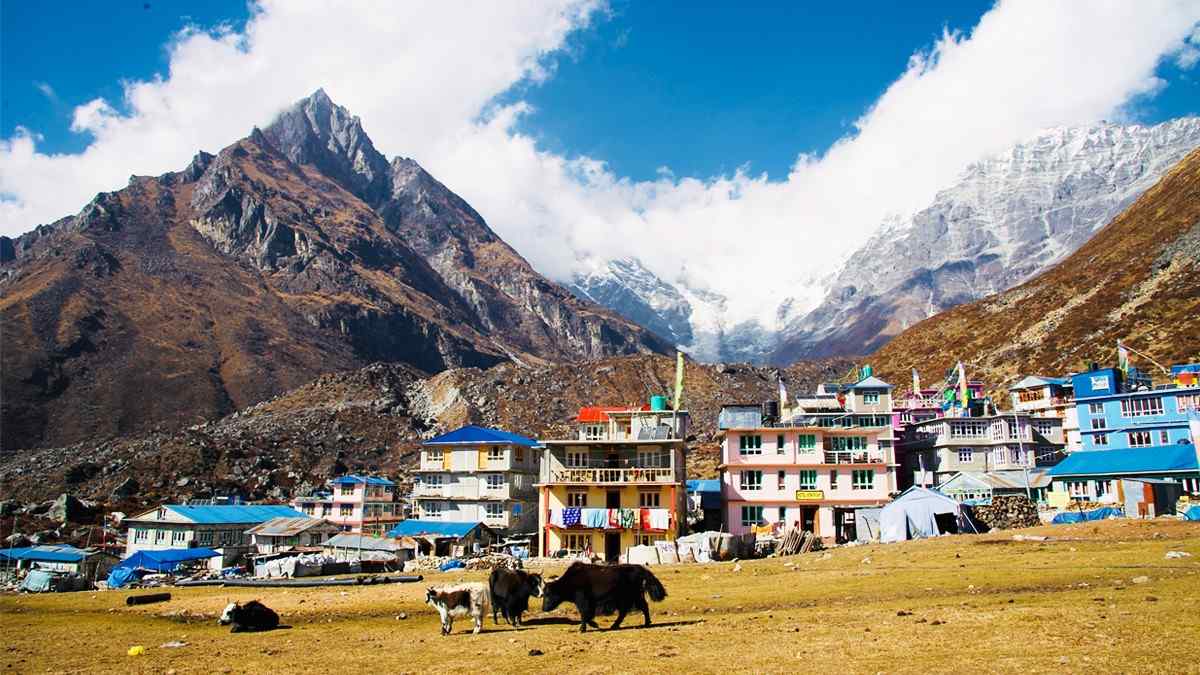
Beautiful village settlement and local life in Langtang trek Nepal
Think of Langtang as a beginner-friendly Himalayan trek with a couple of genuinely tough moments rather than a relentless grind. The trail is shorter than most classic Nepal routes. Here, the altitude gain is spread out reasonably well, and the risk of serious altitude sickness is lower than on the Everest or Manaslu circuits.
Where it earns its "moderate" label is in the terrain and the two optional summit hikes at the top. The first half of the trek, from Syabrubesi up to Langtang Village, is the hardest stretch: a long climb through forest with steady ups and downs.
After that, the valley opens up, and the walking gets noticeably gentler. Then, if you choose to climb Tserko Ri or Kyanjin Ri for the big panoramic views, you're back to a steep, lung-burning morning at altitude.
If you can comfortably walk for five or six hours carrying a light daypack, and you give your body time to acclimatize, Langtang is well within reach.
What makes the Langtang trek difficult
A handful of factors decide whether your trek feels easy or exhausting. Here's what actually matters on this trek:
Altitude
The highest point most trekkers reach is Tserko Ri at 4,984 m (about 16,350 ft), which a lot of operators round up to 5,000 m. The alternative viewpoint, Kyanjin Ri, tops out at 4,773 m. Your highest overnight stop is Kyanjin Gompa at 3,870 m.
Once you're above roughly 3,000 m, the thinner air is the single biggest thing that can slow you down. The good news is that the standard Langtang itinerary gains height gradually and includes an acclimatization day. It means most reasonably fit trekkers handle it fine. But altitude affects everyone differently, and being young or athletic doesn't make you immune.
The climb profile and daily hours
You'll typically walk five to six hours a day, with a couple of longer days pushing toward seven or eight, especially the drop back down to Syabrubesi and the pre-dawn summit hikes. The Syabrubesi–to–Langtang Village day is the one people remember, because it's a big climbing day through forest with a lot of elevation change.
Trail conditions and terrain
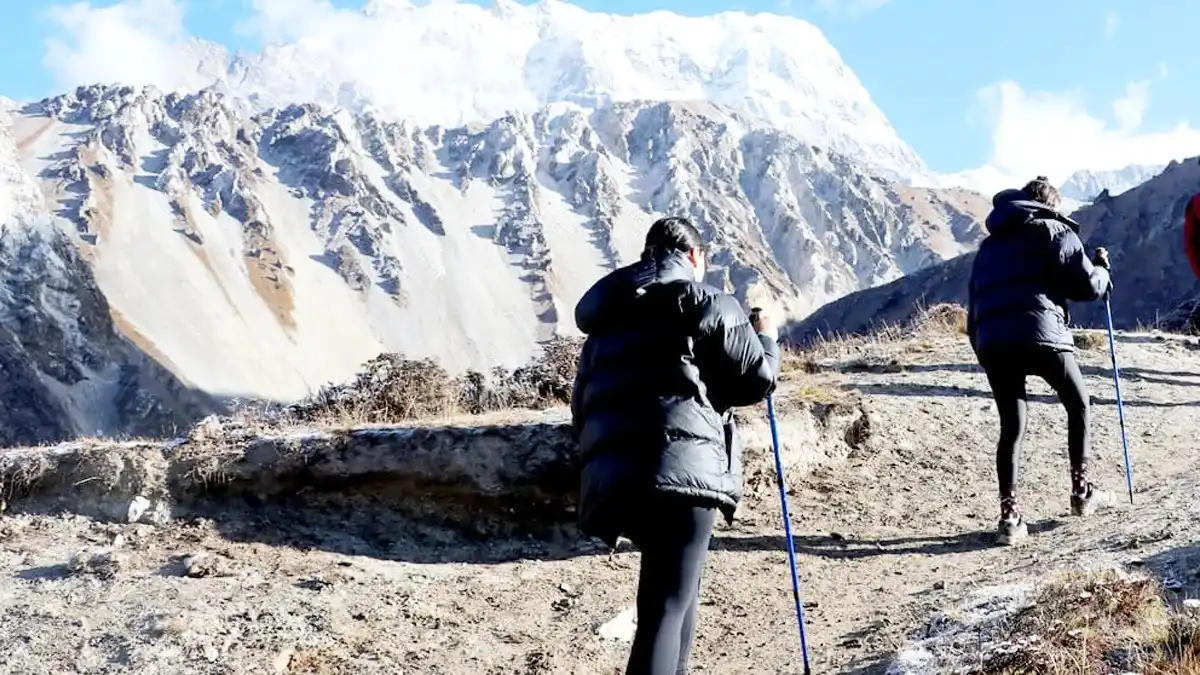
Some parts of the route are rocky, uneven, and cross old landslide zones, so there's some scrambling and careful footing involved. This is where beginners tend to struggle more than fit hikers do. It's not because of fitness, but because the ground demands attention. Good boots and a pair of trekking poles make a real difference here.
The 2015 earthquake and rebuilding
It's worth knowing the history. On 25 April 2015, a magnitude 7.8 earthquake triggered an avalanche that buried the original Langtang Village and killed more than 300 people. The trail reopened in 2017, and the valley has since been rebuilt. Langtang Village stands again as "New Langtang," teahouses run the length of the route, and the community is very much back on its feet. Trekking here now is a direct way to support that recovery.
Remoteness and limited services
The Langtang Valley trek is quieter and more remote than the Everest or Annapurna treks, which is a big part of its charm. But it also means fewer facilities. Mobile signal drops off above Kyanjin Gompa, ATMs don't exist on the trail, and if something goes wrong you're a long way from a hospital. Carry enough cash, download offline maps, and don't count on being able to buy specialist gear once you leave Kathmandu.
Weather and season
Weather is the wildcard that can turn an easy trek into a hard one. Above 3,500 m conditions change fast, and an off-season trek in monsoon rain or deep winter snow will feel far tougher than the same route in clear autumn weather. Pick your season well, and you remove a lot of the difficulty before you even start walking.
Considering the above things will help plan a smooth journey on this trip.
Langtang trek distance and duration
Heading towards Langtang Valley Trek Nepal
The trek starts with a drive from Kathmandu to Syabrubesi, the trailhead. That's roughly 120 km, but the rough mountain road stretches it into a six-to-eight-hour journey by bus or jeep. So brace yourself for a bumpy start.
On foot, you're looking at around 65 km one way up to Kyanjin Gompa, and roughly 70 km of walking in total once you factor in the return leg on the same trail.
Most people do the standard trek in about seven to eight days including travel, though a fit group can knock it out in six, and adding side trips like Gosaikunda Trek or the Tamang Heritage Trail pushes it to nine or ten.
The distance itself isn't the challenge. It's the vertical gain packed into it. As I tell everyone: you need a fit body and a patient mind more than you need to be a marathon runner. You can see the full day-by-day breakdown in our Langtang Valley Trek package.
Altitude sickness on the Langtang trek
Because you climb close to 5,000 m, altitude sickness (AMS) is the health risk worth taking seriously. Even though cases in Langtang are generally milder than on higher routes, precautions matter.
The following basics keep almost everyone safe:
Go slow and don't skip the acclimatization day. Rushing the ascent is the number one cause of AMS. Climb high during the day, sleep lower when you can.
Drink plenty of water. Aim for three to four litres a day. Dehydration makes altitude symptoms worse and is easy to underestimate when it's cold.
Know the early signs. Headache, nausea, dizziness, and trouble sleeping are the common ones. If they get worse instead of better, the fix is to descend, not to push on.
Consider Diamox. Many trekkers carry acetazolamide (Diamox) as a preventative or backup. Talk to your doctor before your trip about whether it's right for you.
Take regular breaks rather than trying to power through a whole day in one go. Slowing down isn't a weakness up here; it's the actual technique.
Yes, with the right preparation. Langtang is one of the treks I most often recommend to first-timers precisely because it's shorter, lower-risk, and closer to Kathmandu than the big-name routes. The parts that trip beginners up are the long forest climb early on and the rocky footing. Both of these are much easier to manage if you've done some hiking beforehand and you're not carrying too much.
If you've never trekked at altitude and you want the reassurance of a licensed guide who knows the trail and carries a first aid kit, going with an organized group takes most of the uncertainty out of it.
Season affects difficulty more than almost anything else, so this matters.
Autumn (late September to November) is the most popular window. During this time, you will get stable weather, clear mountain views, and comfortable daytime temperatures.
Spring (March to May) is the other prime season, with warmer days and rhododendron forests in bloom.
Winter (December to February) is doable but cold, and snow can block the higher viewpoints. However, this is best if you want peaceful trails and snow views.
Monsoon (June to August) brings rain, leeches, cloud-covered peaks, and slippery trails. This is mostly recommended for experienced trekkers. But the greenery is what makes this season attractive.
If you have any flexibility, trek in autumn or spring and you'll experience Langtang closer to its "easy" end. Saying that, with good guidance and good preparation, any time of the year is ok to do this trek.
How to prepare for the Langtang trek
You don't need to be an athlete, but a few weeks of preparation pays off enormously.
Start four to six weeks out with a mix of cardio, some strength work for your legs, and, ideally, a few practice hikes on hills with a loaded daypack. Gradually increase distance and elevation so your body knows what a long day feels like before you're doing it at altitude.
For gear, the essentials are sturdy broken-in hiking boots, layered clothing you can add and shed as temperatures swing, a comfortable backpack, trekking poles, sunscreen and sunglasses, and a personal first aid kit. Pack light. Overpacking punishes you on every climb, so be honest about what you'll actually use.
Just as important is the mental side. Listen to your body, don't try to keep pace with someone fitter than you, and treat rest days as part of the plan rather than a delay. A patient trekker almost always finishes stronger than a fast one.
Permits and guide requirements
For the Langtang Valley Trekking, you'll need a Langtang National Park Entry Permit and a TIMS (Trekkers' Information Management System) card. Under current Nepal rules, foreign trekkers also need to go with a licensed guide rather than trekking solo in the national park.
If you book through a company, all of this is arranged for you, so you won't need to queue at government offices yourself. Rules and fees do change from year to year, so confirm the latest before you travel.
Langtang Valley Trek Emergencies and evacuation
Serious problems are rare, but it's smart to know how they're handled. For minor issues, your guide carries a first aid kit and basic medicines and can treat most things on the trail. If you need more, the nearest health post has a health assistant who can help.
In a genuine emergency, helicopter evacuation is possible, and your guide and trekking company will coordinate it. The catch is cost: heli evacuations are expensive, so make sure your travel insurance specifically covers high-altitude trekking and helicopter rescue before you set off. It's the one piece of admin you don't want to skip.
Langtang Valley Trek difficulty: FAQ
Is the Langtang Valley Trek hard?
No, it's graded easy to moderate. It's a good choice for beginners with reasonable fitness. The toughest parts are the forest climb from Syabrubesi and the optional summit hikes at the top.
What is the highest point of the Langtang trek?
Tserko Ri at 4,984 m (about 16,350 ft), reached as an optional day hike from Kyanjin Gompa. Kyanjin Ri (4,773 m) is a slightly shorter alternative.
How many hours a day do you walk?
Usually five to six hours, with a few longer days of seven to eight hours. This also includes the summit mornings and the descent back to Syabrubesi.
Do I need previous trekking experience?
Not strictly, but some hill-walking beforehand makes the terrain much easier to handle. A licensed guide is required and adds a big safety margin for first-timers.
Is altitude sickness a big risk in Langtang?
The risk is lower than on higher treks but still real above 3,000 m. So, ascend slowly, hydrate well, use the acclimatization day, and descend if symptoms worsen.
When is the best time to trek Langtang?
Autumn (late September to November) and spring (March to May) offer the most stable weather and the easiest trekking conditions.
Ready to see it for yourself? Take a look at our full Langtang Valley Trek itinerary, and get in touch if you want help matching the trek to your fitness and dates.
Kishwor Adhikari is a passionate writer with a deep enthusiasm for trekking and adventure. His extensive travels across Nepal, exploring its diverse landscapes and hidden corners, have shaped his unique perspective on the country's natural beauty. With a wealth of first-hand experience in adventure trekking, Kishwor has become a trusted voice for fellow enthusiasts. Through his writing, he shares invaluable insights, offering practical advice and inspiration for both seasoned trekkers and novices alike. His dedication to sharing his journey and knowledge helps others discover the wonders of Nepal's wilderness, making his work an essential resource for anyone seeking adventure in the region.