Mahashivaratri Celebration 2026 Nepal
| Celebration Aspect | Description |
| Mahashivaratri 2026 Date | Falgun 03, 2082 BS (Sunday, February 15, 2026) |
| Main Deity Worshipped | Lord Shiva (Shiva Lingam) - symbol of divine energy, transformation, and destruction of evil. |
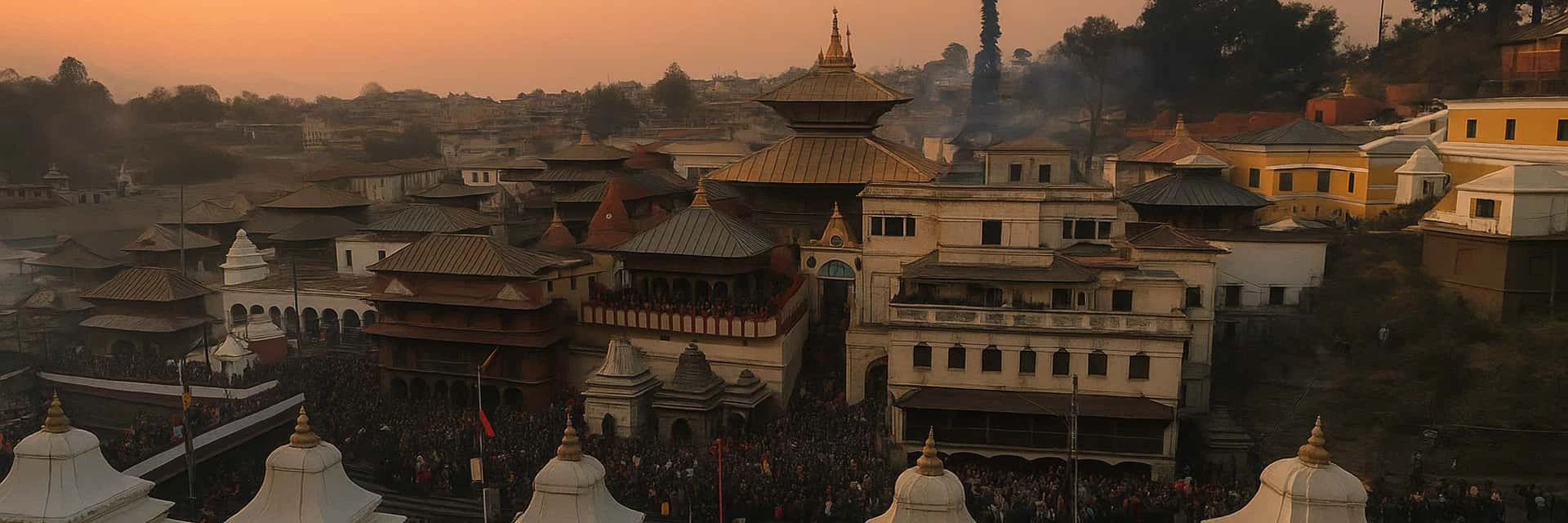
| Main Temple | Pashupatinath Temple, Kathmandu- the spiritual center where thousands of devotees and Sadhus gather. |
| Devotees’ Practices | People fast throughout the day, meditate, chant Om Namah Shivaya, and stay awake all night offering prayers. |
| Offerings to Lord Shiva | Water, milk, honey, fruits, Bel (Bilva) leaves, and flowers are offered to the Shiva Lingam. |
Night Vigil (Jagaran) | Devotees sing bhajans, light oil lamps, and stay awake till dawn. This symbolizes awareness and spiritual awakening. |
| Sadhus’ Participation | Thousands of Sadhus from India and Nepal visit Pashupatinath, performing rituals, yoga, and meditation in Shiva’s honor. |
| Women’s Observance | Married women pray for their husbands’ well-being; unmarried girls pray for an ideal partner like Lord Shiva. |
Public Celebration | Besides Shivaratri in Pashupati Kathmandu Nepal, other places are Temples, riversides, and public spaces. They glow with lights, incense, and devotional music. Also, there will be fairs and food stalls adding festive charm. |
| Spiritual Belief | Staying awake and worshipping through the night is believed to destroy sins. Yes, this brings blessings and leads to moksha (liberation). |
Legend of Mahashivaratri
According to one of the most popular beliefs, Maha Shivaratri marks the sacred wedding of Lord Shiva and Goddess Parvati. Their divine union symbolizes the merging of masculine and feminine energies. Actually, the balance of creation and harmony in the universe.
Another legend says that on this very night, Lord Shiva performed his Tandava. Tandava is the powerful cosmic dance representing creation, preservation, and destruction. This dance signifies the eternal rhythm of the universe and the balance of life and death.
As per ancient scriptures, there was a fierce argument between Lord Brahma and Lord Vishnu over supremacy. Then, a massive pillar of light (Jyotirlinga) appeared. Unable to find its beginning or end, both realized the infinite nature of Lord Shiva. This event is commemorated as Maha Shivaratri.
A simple hunter once unknowingly worshipped Lord Shiva by dropping Bilva (Bel) leaves onto a Shiva Lingam while resting on a tree. Though unaware, his act of devotion and fasting throughout the night earned him divine blessings. So, this story highlights the importance of sincerity and faith over ritual.
It is also believed that during Maha Shivaratri, Lord Shiva saved the world by drinking the deadly poison Halahala. That emerged from the churning of the ocean (Samudra Manthan). To honor this act of sacrifice and protection, devotees fast and pray all night. They seek liberation from sins and the cycle of rebirth.
Importance of the Mahashivaratri festival
The Shivaratri Festival in Nepal carries both cultural and religious importance. Actually, it is an emotion that has been passed on by ancestors. Here are the major importance, have a look:
Ancient Vedic Origins
The celebration of Maha Shivaratri dates back to the Vedic period, mentioned in sacred texts like the Skanda Purana and Linga Purana. It is believed to have been observed for thousands of years as a night of union between the individual soul and the supreme consciousness.
A Festival of Devotion to Lord Shiva
Maha Shivaratri is dedicated to Lord Shiva, the destroyer of evil and the embodiment of transformation. Devotees observe fasting, meditation, and prayers. This helps them connect with his divine energy and seek protection from negativity.
Symbol of Spiritual Awakening
The night represents the victory of light over darkness, ignorance over wisdom. Staying awake during Shivaratri signifies rising above desires. And realizing one’s higher self through devotion and meditation.
Cosmic Alignment of Energy
Ancient sages believed that on this night, planetary positions create a powerful spiritual vibration. This allows the body and mind to reach higher states of consciousness. Hence, meditating or chanting “Om Namah Shivaya” is considered especially effective.
Cultural and Social Unity
Maha Shivaratri brings people together beyond caste or background. From temples to homes, the festival unites communities in faith. Also, devotion and shared cultural heritage across Nepal and the Hindu world.
Role in Hindu Philosophy
Shivaratri celebration in Nepal reminds devotees of Shiva’s role in the cycle of creation. Also, in preservation and destruction, the natural order of life. The festival teaches acceptance of change and transformation as part of spiritual growth.
Women’s Devotion and Rituals
For women, Maha Shivaratri holds special importance. Married women fast for their husbands’ long lives and harmony. Meanwhile, unmarried girls pray for a life partner with the virtues of Lord Shiva.
Path to Liberation (Moksha)
Ultimately, Maha Shivaratri is seen as a gateway to liberation. People do fasting, meditating, and staying awake in Shiva’s remembrance. Devotees believe they can wash away past sins and attain spiritual freedom.
Mahashivaratri: The Night of Shiva Parvati
According to Hindu mythology, Maha Shivaratri is believed to be the night when Lord Shiva and Goddess Parvati were united in holy marriage. Parvati, born as the daughter of the Himalayas, performed years of deep meditation and penance to win Shiva’s heart. Her devotion moved him, and he accepted her as his eternal consort.
Their divine union represents the merging of Shiva’s consciousness and Parvati’s energy (Shakti). It is the balance of power that sustains creation. This sacred event is celebrated every year on the dark night of Falgun, symbolizing the triumph of spiritual love over worldly desire.
On this night, the heavens were said to be illuminated with celestial lights. And divine music as gods and sages rejoiced at their marriage. The Himalayas, Parvati’s birthplace, were filled with divine energy, and even the rivers were believed to flow with purity and devotion.
Devotees stay awake through the night to honor the same spiritual awakening. This is believed to occur when the divine masculine and feminine energies unite within oneself. Staying conscious during this sacred night is believed to open the path to enlightenment and divine blessings.
Spiritually, the Night of Shiva and Parvati teaches the importance of harmony. Similarly, discipline and inner awakening. It reminds devotees that true love is not about possession but about the union of souls through devotion and understanding.
Fasting, chanting, and meditation performed on this night are symbolic ways to purify the heart and mind. This literally allows one to experience the eternal connection between human consciousness and divine truth. Just as Parvati’s devotion brought Shiva’s grace.
How do people celebrate Mahashivaratri in Nepal?
Mahashivaratri 2026 is going to be grand and unforgettable in Nepal. You can be a part of this festival and enjoy with the local as well as international guests. Here is the right way people celebrate this special day:
Clean and Prepare the Home or Puja Place
Begin by cleaning your home or the designated worship area. Decorate the space with flowers, lamps, and incense sticks to create a sacred and peaceful environment for Lord Shiva.
Set Up the Shiva Lingam
Place a Shiva Lingam on a clean pedestal. Offer water, milk, honey, and yogurt to the Lingam, along with Bel (Bilva) leaves, flowers, and fruits. This ritual symbolizes purification and devotion.
Light Diyas and Incense
Light oil lamps (diyas) around the worship area and incense sticks to invoke spiritual energy. The light symbolizes knowledge, while the aroma represents purity and devotion.
Chant Mantras and Prayers
Recite “Om Namah Shivaya” and other Shiva mantras. You may also read from sacred texts like the Shiva Purana. Continuous chanting throughout the night is believed to bring divine blessings.
Fasting and Abstinence
Observe a day-long or night-long fast, avoiding grains and non-vegetarian foods. Some devotees consume only fruits, milk, or water. Fasting signifies self-discipline and spiritual focus.
Stay Awake Through the Night (Jagaran)
Remain awake until dawn, meditating on Lord Shiva and reflecting on ethics, truth, and self-control. Many devotees sing bhajans, perform yoga, or read spiritual texts during this time.
Offer Prasad and Conclude Rituals
At dawn, conclude the worship by distributing prasad among family members or devotees. Prasad means offered fruits, sweets, or holy water. Express gratitude to Lord Shiva and seek his blessings for health, prosperity, and spiritual growth.
Naga Babas in Pashupatinath- The Most Fascinating Sight
During Maha Shivaratri, the sacred grounds of Pashupatinath Temple in Kathmandu come alive with the mystical presence of Naga Babas. They are ash-smeared holy men who are among the most fascinating sights of the festival. These sadhus are often unclothed and covered in sacred ash (vibhuti). This symbolizes detachment from worldly desires and complete devotion to Lord Shiva.
Many Naga Babas travel from India’s Varanasi, Haridwar, Ujjain, and Nepal’s own Himalayan regions to take part in this grand celebration. They spend days meditating, smoking holy herbs, and chanting “Om Namah Shivaya”. They bless devotees who gather from across the world to witness this spiritual spectacle.
Their connection to Maha Shivaratri lies in their deep association with Lord Shiva. He is the supreme ascetic who renounced all material pleasures. For Naga Babas, Pashupatinath becomes a living embodiment of Mount Kailash, Shiva’s eternal abode. The festival gives them a sacred platform to express their devotion through meditation. Also, through rituals and fire ceremonies.
What makes them truly unique is their fearless lifestyle. Actually, they live in caves or forests and survive on minimal food. Not just that, they are practicing intense penance to attain spiritual liberation. Their presence adds an otherworldly aura to Pashupatinath. This makes Maha Shivaratri in Nepal not just a religious celebration but a powerful display of devotion. Also, asceticism and ancient Hindu mysticism.
Shivaratri and Foreigners in Nepal
As an international visitor in Nepal, you can expect the following things in Mahashivaratri:
Experience the Mystical Energy at Pashupatinath - During Maha Shivaratri, tourists can feel an extraordinary spiritual atmosphere. Thousands of people gather to honor Lord Shiva. The air fills with incense, chants, and devotion, a moment that truly captures the soul of Nepal.
Meet the Naga Babas- The arrival of ash-covered Naga Babas from India and Nepal adds mystery and fascination to the festival. Tourists can interact with these holy men and learn about their ascetic lifestyle. They can witness their deep meditation and fire rituals up close.
Join the All-Night Vigil- As the night falls, the temple complex glows with oil lamps, mantras, and music. Visitors can stay awake with devotees, experiencing the rare tradition of singing, dancing, and praying until dawn. This is a mesmerizing sight of devotion and unity.
Explore the Cultural Streets of Kathmandu- The surroundings of Pashupatinath turn festive, with lively stalls selling prasad. There will be colorful garlands and local foods. Tourists can taste Nepal’s festive delicacies. And enjoy street performances celebrating Lord Shiva.
Capture the Spirit of Faith and Celebration- Maha Shivaratri offers endless moments to photograph. From Naga Babas and decorated shrines to the mass of glowing lamps along the Bagmati River. It’s a rare chance for travelers to witness Nepal’s living spirituality at its most vibrant.
Besides this, they can also be a part of the Himalayas trekking and cultural tours near Kathmandu Valley. This is a wonderful season for hiking and trekking in Nepal. You can contact Breeze Adventure for a customized package. Major trekking destinations are the Express Everest Base Camp Trek, the Annapurna Base Camp Trek, the Langtang Valley trek, and the Mardi Himal 2 Days Trek.
Tips for sustainable travel during Shivaratri in Nepal
- Dress modestly and comfortably for temple visits.
- Carry reusable water bottles and avoid plastic.
- Respect local customs and rituals.
- Arrive early to avoid large crowds.
- Hire local guides for better cultural understanding.
- Use public transport or shared rides to reduce congestion.
- Keep noise minimal near temples and meditation areas.
- Dispose of waste responsibly and use recycling bins.
- Try local vegetarian festival foods.
- Capture memories respectfully without disturbing worshippers.
You May Ask:
What is the story behind Shivaratri?
Shivaratri celebrates the divine legends of Lord Shiva, including his marriage to Goddess Parvati. It also celebrates his cosmic dance (Tandava) and his role in saving the universe by drinking poison during Samudra Manthan. It symbolizes devotion, spiritual awakening, and the triumph of good over evil.
Why is Shivaratri celebrated in Nepal?
Shivaratri is celebrated in Nepal to honor Lord Shiva, one of the principal deities in Hinduism. Devotees worship the Shiva Lingam, fast, meditate, and stay awake all night. They practice this seeking blessings, protection, and spiritual growth.
When is Shivaratri in Nepal?
Maha Shivaratri is observed on the fourteenth day of the waning moon in the month of Falgun. In 2082 BS, it will fall on Falgun 03, which corresponds to Sunday, February 15, 2026.
Where is Shivaratri celebrated in Nepal?
The festival is celebrated across Nepal, with the Pashupatinath Temple in Kathmandu being the main center. Other temples, rivers, and sacred ponds in Pokhara. Likewise, Janakpur and the surrounding regions also host large gatherings of devotees.
Why is night important during Shivaratri?
The night of Shivaratri is considered highly spiritual because it marks Shiva and Parvati’s union. Similarly, the cosmic dance of Shiva and the divine energy alignment. Staying awake symbolizes awareness, devotion, and overcoming ignorance.
What are the rituals of Shivaratri?
Rituals include fasting, offering water, milk, honey, fruits, and Bilva leaves to the Shiva Lingam. Also, chanting mantras like Om Namah Shivaya. They perform night-long meditation, and light diyas and incense.
What do people do on Mahashivaratri?
Devotees fast, meditate, chant Shiva mantras, visit temples, and participate in all-night worship. Many offer prayers for prosperity, health, and spiritual progress. They sing bhajans and observe silence or self-discipline.
Why do girls do Maha Shivaratri Fast?
Married women fast to pray for their husband’s long life and well-being. On the other hand, unmarried girls fast to attract a virtuous life partner resembling Lord Shiva.
Can an unmarried girl do Mahashivaratri Fast?
Yes, unmarried girls observe the fast with devotion, praying to Lord Shiva for a good and ideal husband. It is considered highly auspicious for their future marital life.
What color should you wear on Maha Shivaratri?
Devotees often wear white or saffron, symbolizing purity, spirituality, and devotion. Some also choose red or yellow for traditional and festive significance.
Why is Maha Shivaratri Important for couples?
For couples, Maha Shivaratri reinforces love, devotion, and harmony. Observing the fast and praying together invokes Lord Shiva’s blessings for a strong, healthy, and peaceful marital life.
What do couples do on Maha Shivaratri?
Couples visit Shiva temples, offer Bilva leaves, milk, and fruits to the Lingam. They chant mantras together, and sometimes observe fasting or night-long prayers. This is to seek longevity and harmony in their relationship.
How is Shiva Ratri celebrated in Nepal?
In Nepal, Shiva Ratri is celebrated with temple visits, fasting, all-night vigils, chanting, and offerings. The Pashupatinath Temple sees a massive gathering of devotees and Sadhus. Meanwhile, other regions host smaller rituals and local celebrations.
Which religion is Shivaratri?
Shivaratri is a Hindu festival, celebrated primarily by Hindus in Nepal and India. It is also celebrated in other countries with Hindu communities.
Who can celebrate Shivaratri?
Anyone can celebrate Shivaratri. Devotees of all ages, genders, and marital status participate in prayers. They enjoy fasting, meditation, and temple rituals to honor Lord Shiva.