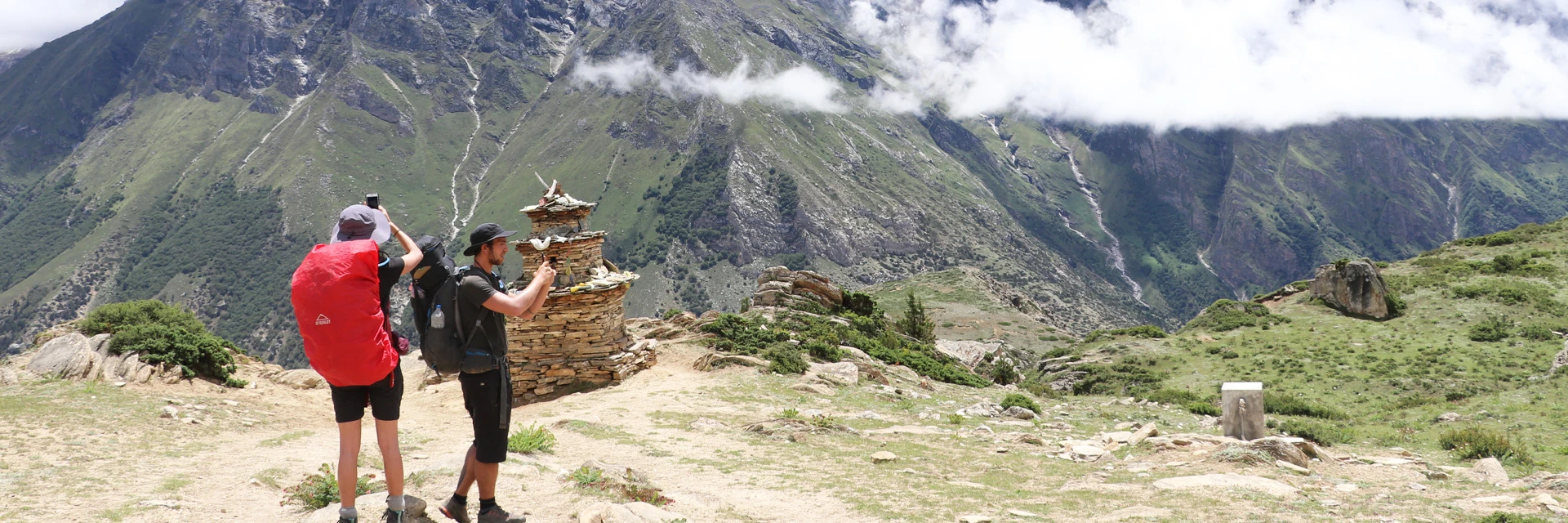
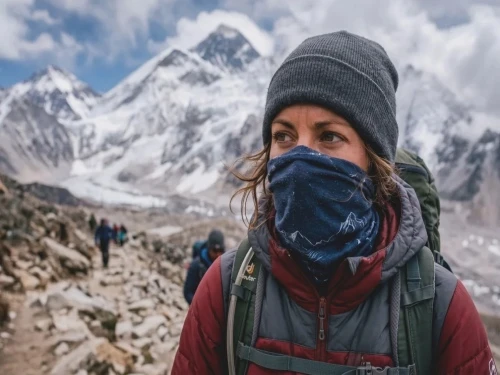
The permit is required because Nar & Phu are officially listed as a Restricted Area by the Government of Nepal. To enter the valley, trekkers must obtain a Restricted Area Permit (RAP) and an ACAP (Annapurna Conservation Area Permit). And, in some cases, a TIMS card, depending on the updated TIMS Nepal 2026 rules.
The Nar Phu restricted permit cost is season-based:
USD 100 per week from September–November, and USD 80 per week from December–August, plus ACAP USD 30.
Solo trekking is not allowed, and permits can only be issued through a registered trekking company.
Table of Contents
Permit Fees & Updated Rules
The Nar and Phu Valley permit is controlled under Restricted Area regulations. This requires trekkers to hike with a licensed guide and have permits processed by a government-registered trekking company. The Nar Phu restricted permit cost varies by season:
September–November: USD 100/week
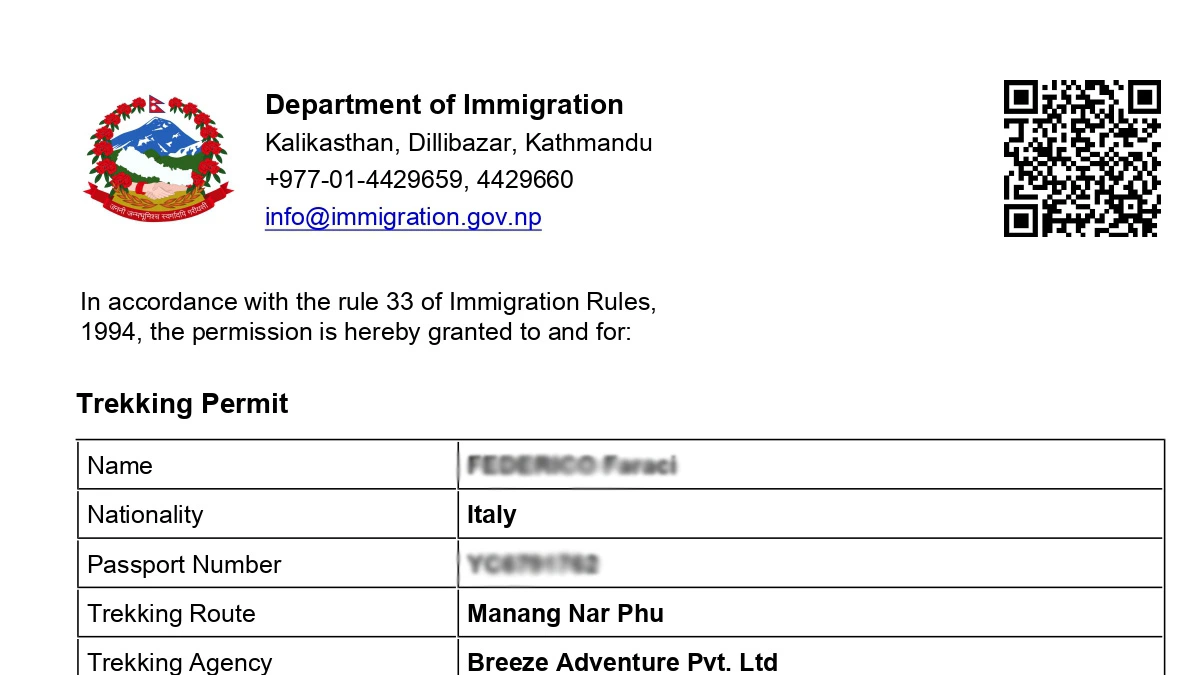
Nar Phu Trekking Permit Sample
December–August: USD 80/week Extra days are charged USD 15/day. Additionally, you need ACAP (USD 30), and TIMS Nepal 2026 may apply depending on current updates. No personal applications are accepted at immigration offices.
Checking points are located at Koto, Meta (shifting to Kyang), Manang, Dharapani, and Besishar. Rules ensure cultural protection, controlled access, and safety.
How to Apply for the Nar Phu Valley Permit
The Nar Phu trekking permit cannot be applied for individually. Only a Nepal-registered trekking agency can request it through the Department of Immigration in Kathmandu, as Nar and Phu are a restricted area.
The process is simple for trekkers. First, confirm your itinerary and travel dates. Then submit your passport copy, Nepal visa stamp, and two passport-size photos to your agency. They complete the application, pay the permit fees, and collect the permit within 24–48 working hours. Your licensed guide carries the permit through all checkpoints during the trek, ensuring a smooth and legal entry into the Valley.
Documentation Required
To process the Nar and Phu Valley permit, you need:
A passport valid for 6 months
Valid Nepal visa (arrival stamp)
Two passport-size photos
Travel dates and route plan
Personal details (nationality, date of birth)
Emergency contact information
The agency completes the official forms and submits them to the immigration office. The original passport is checked when issuing the permit. No online or self-application system currently exists for this restricted region.
Why is a Guide Mandatory?
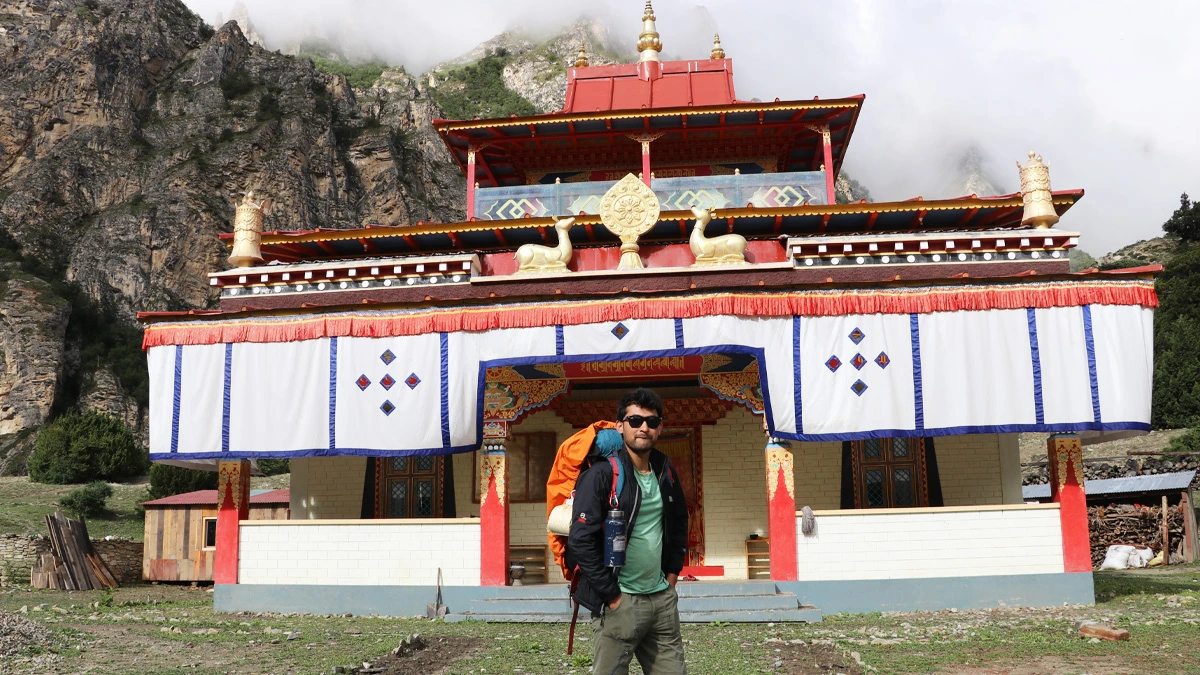
Happy moment infront of traditional monastery in Nar Phu Trekking
A licensed guide is mandatory on the Nar Phu trek because the region is officially listed as a Restricted Area under tourism regulations. A strong Nar Phu map and itineraryplay a major role here. This restriction ensures cultural preservation and controlled access to indigenous Tibetan communities. Further, safety in a remote environment with limited infrastructure.
Guide presence helps with altitude decisions, weather risks, route changes, and emergency support. The area has multiple checkpoints, and permits are only valid when accompanied by a guide registered through a trekking company. Solo trekking and self-permit systems are not permitted.
Where the Money Goes
Permit revenue supports local development and conservation in the Nar & Phu Valley. A portion goes to the Annapurna Conservation Area Project (ACAP) for environmental protection. Similarly, trail maintenance, waste management, and reforestation programs.
Funds also support local administration, heritage preservation, and community education programs. Mostly in remote Himalayan settlements. The local accommodation and food get support from this. Restricted permit fees help protect local culture. Especially Tibetan Buddhist villages, and ensure sustainable tourism.
The controlled permit system limits crowding and reduces trail pressure. It ensures direct economic benefits reach the valley instead of mass tourism impacts.
ACAP Details: History & Why It’s Needed
ACAP (Annapurna Conservation Area Permit) was launched in 1986 as Nepal’s first large-scale conservation model. Replacing hunting zones with community-managed conservation. The program protects wildlife, glaciers, and forests across the Annapurna region. This includes Nar & Phu Valleys, Manang, and the lower foothills.
ACAP fees fund trail maintenance, bridge construction, and local ranger teams. It is required for all treks that pass through the Annapurna Conservation Area, including Nar Phu, Annapurna Circuit, Tilicho Lake, and the Manang areas. ACAP ensures responsible trekking and supports local environmental projects.
From narrow gorges to timeless villages, watch the full Nar Phu Valley Trek video by Breeze Adventure and feel the adventure beyond the mainstream trails.
Breeze Adventure Handles All Permits for You
With Breeze Adventure, the permit process is effortless. We handle all RAP, ACAP, and TIMS applications, manage paperwork at the immigration office, and coordinate every checkpoint during the trek. You simply provide your passport and photos, and we do the rest.
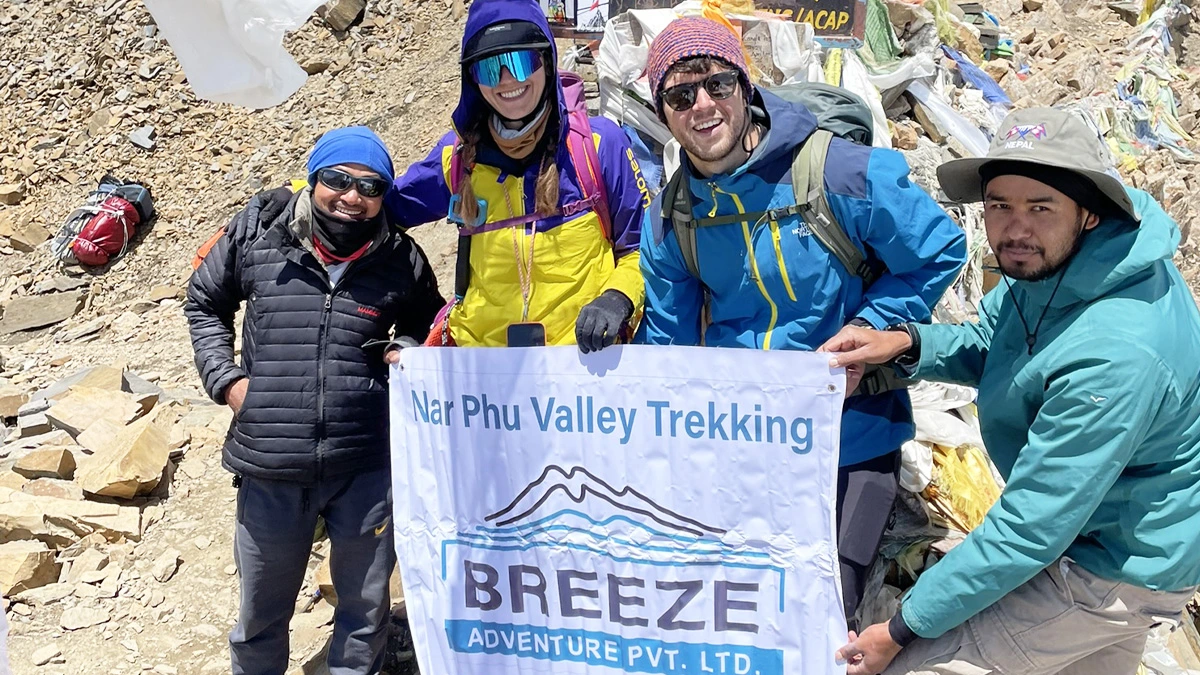
Breeze Adventure Team with trekkers in Nar Phu Valley
Our guides know the system, have completed this trek many times, and ensure your trip is legal, safe, and stress-free from start to finish.
What is the cost of the Nar Phu Valley permit?
The Nar Phu Valley Restricted Area Permit costs USD 100 per week from September–November and USD 80 per week from December–August. Extra days cost USD 15 per day. You must also purchase the ACAP permit (USD 30).
Why is a guide required for the Nar Phu Trek?
A licensed guide is mandatory because Nar Phu Valley is a Restricted Area protected by the Government of Nepal. The guide ensures permit validation at checkpoints and protects local culture. Plus increases safety on remote trails with limited facilities.
Where to apply for the Nar Phu restricted permit?
The Nar and Phu permit can only be applied for through a Nepal-registered trekking company. Agencies submit your documents to the Department of Immigration in Kathmandu. They pay the fees and collect the permit within 24–48 working hours.
Is TIMS required for Nar Phu Valley in 2026?
TIMS is not always mandatory for the Nar and Phu Valley because it is already a restricted area with a controlled permit system.
Kishwor Adhikari is a passionate writer with a deep enthusiasm for trekking and adventure. His extensive travels across Nepal, exploring its diverse landscapes and hidden corners, have shaped his unique perspective on the country's natural beauty. With a wealth of first-hand experience in adventure trekking, Kishwor has become a trusted voice for fellow enthusiasts. Through his writing, he shares invaluable insights, offering practical advice and inspiration for both seasoned trekkers and novices alike. His dedication to sharing his journey and knowledge helps others discover the wonders of Nepal's wilderness, making his work an essential resource for anyone seeking adventure in the region.