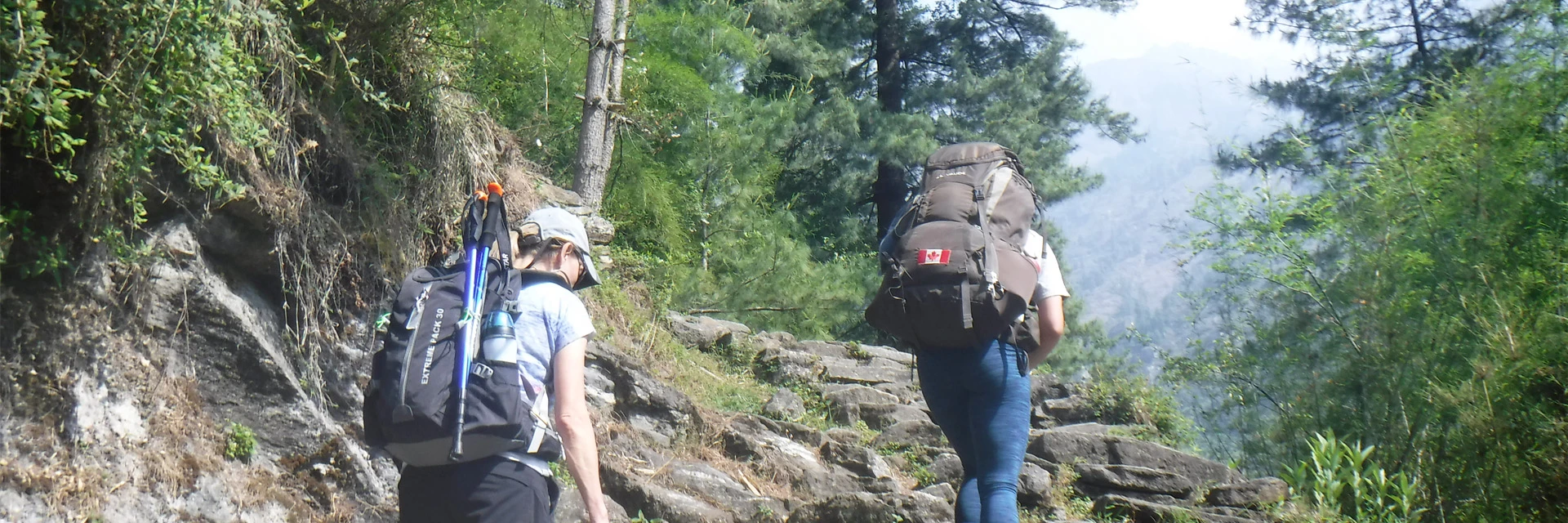
High above the Marsyangdi River, Nepal hides two legendary Himalayan settlements- Nar and Phu. These villages reveal a living museum of ancient Tibetan culture. Including unchanged monasteries, yak caravans, and simple Himalayan life. Snow peaks stand silent above stone houses, prayer flags dance in the wind, and locals follow rhythms that feel centuries old.
Travelers come here not only for mountain views, but for a rare chance to feel Tibetan villages in Nepal. Here, tradition is stronger than tourism, and Nar Phu Valley trek heritage remains untouched by modern roads.
Table of Contents
Why Nar & Phu Are Culturally Unique
Life in the mountains is simple, seasonal, and deeply spiritual. The people of Nar and Phu still follow a medieval pattern of survival, growing barley, keeping yaks, and storing food for long winters. Their homes are built of stone, stacked close for warmth, and the narrow alleyways create a maze-like architecture.
In summer and early autumn, villages come alive with weddings and harvest celebrations. There will be long caravans of yak herders moving between pastures. If you arrive in August or September, you will witness the most authentic moments of the Nar and Phu valley culture.
Lifestyle of Nar & Phu: Real Trek Experience
Life here is basic, honest, and non-commercial. There are no big lodges, no fancy menus. Only local homes offering the warmth of a shared kitchen and fresh barley soup. In late summer, many families prepare for weddings. You see colorful dresses, young monks playing traditional instruments, and elders chanting ancient hymns.
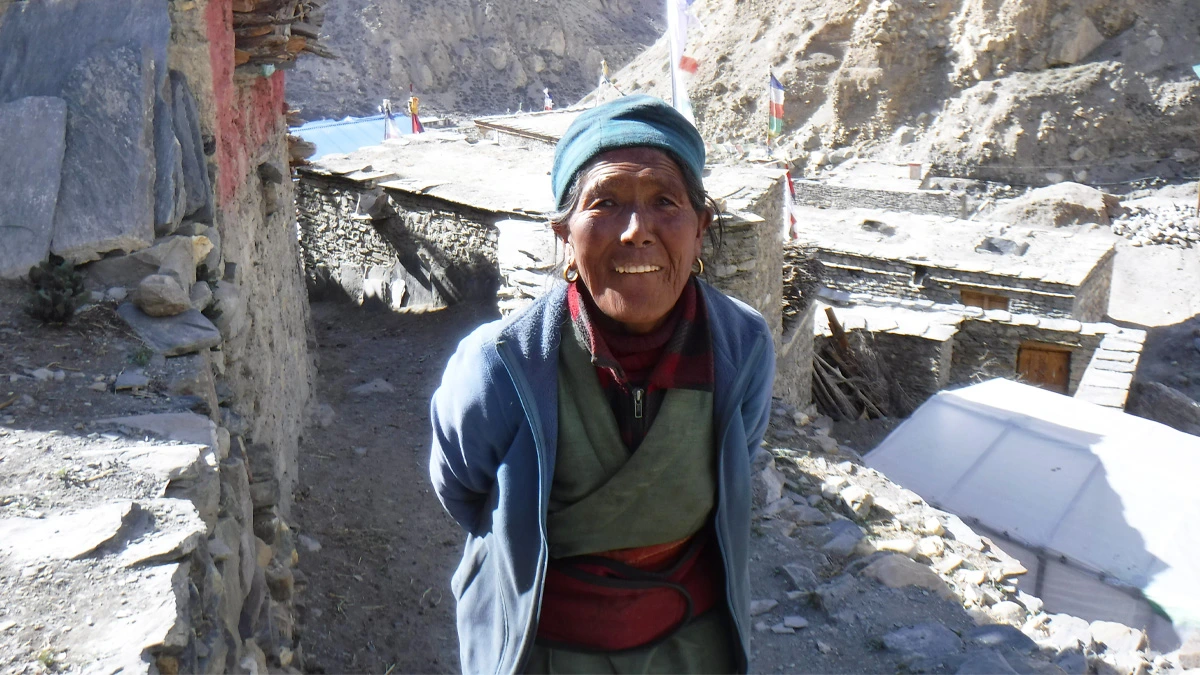
Old lady with bright smile in Nar Phu Valley
Children run freely in the stone alleys, newborn yaks learn to walk, and the whole community gathers to celebrate. This is the best time to understand Himalayan Buddhist culture because everything happens naturally. Not for tourists, but for their own joy.
Even though Nar Phu is a Himalayan valley like Tsum Valley, they have completely different lifestyles and cultures. Check out the Nar Phu vs Tsum Valley trek for more info.
Monasteries in Nar Phu
Nar Phu is home to ancient Himalayan monasteries preserving Tibetan Buddhist traditions. Tashi Lhakhang in Phu is historically linked to the Karmapa lineage and holds sacred relics.
Satya Gumba at Nar Phedi welcomes travelers with prayers and hospitality. These monasteries guide local life, festivals, and spiritual decision-making.
Tashi Lhakhang Monastery
High above the village of Phu stands Tashi Lhakhang Monastery, one of the most sacred monasteries in Nar Phu. The monastery traces its roots to the teachings of the great Tibetan master Karmapa. Famous for blessing the region centuries ago. Built in a dramatic location on a cliff, it offers sweeping views over the stone roofs of Phu village and the wide valley beyond. Such places make this valley an adventurous trekking destination. Nar Phu Valley trek difficulty further talks about the adventure level in this journey.
Inside, old murals, ancient manuscripts, and ritual objects tell the history of Nar Phu heritage. Local people visit the monastery daily for prayer, decision-making, and blessings before seasonal migrations. Visiting it feels deeply spiritual and unforgettable.
Satya Gumba, Nar Phedi
On the way between Nar Phedi and Nar village, travelers find Satya Gumba, a quiet monastery hidden in the folds of the valley. Unlike the dramatic cliff setting of Phu, Satya Gumba sits close to the river. Often surrounded by prayer flags and yak fields. The monastery is known for its welcoming nuns, who offer warm tea and food to passing trekkers. Thereby making the stop meaningful and human.
The chanting here is gentle, and evenings feel peaceful with butter lamps glowing inside the prayer hall. Satya Gumba represents the living spirit of Himalayan Buddhist culture. Here, kindness is the first teaching.
Festivals & Yak Caravans
The most important celebration in Nar and Phu is Yartung. It is a high-mountain festival held during the full moon of August. The festival marks the end of summer and the return of animals from remote pastures. Villagers celebrate with horse racing, music, community feasts, and blessings from monks.
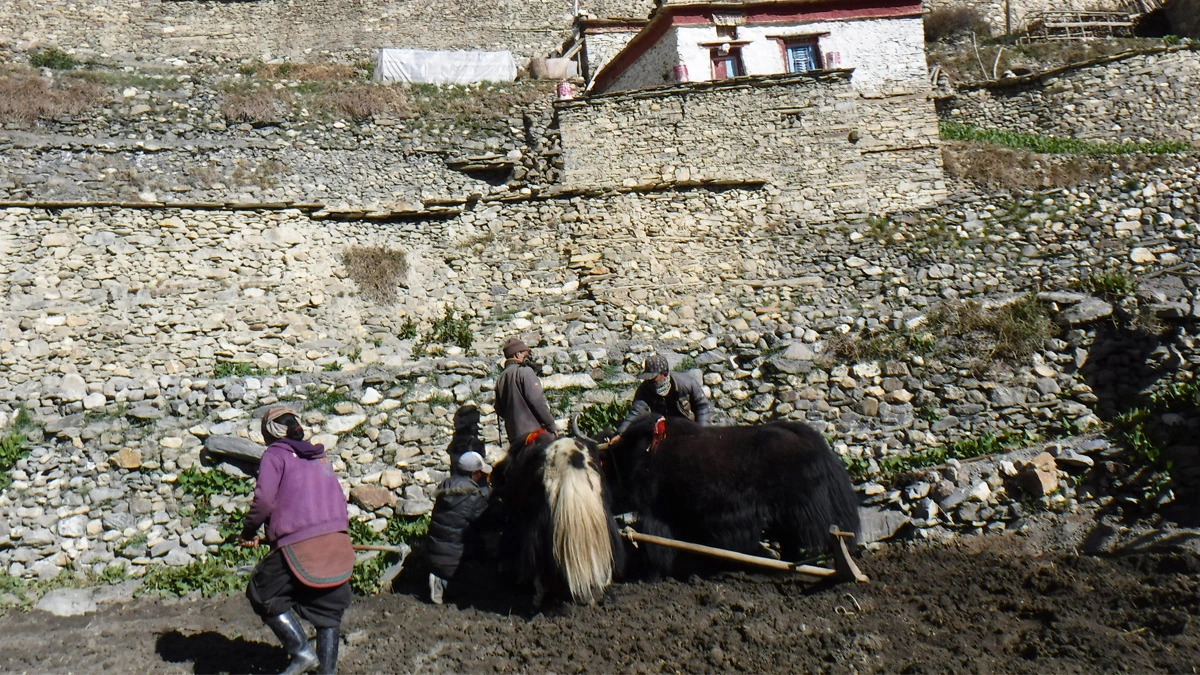
Local people using yaks for land cultivating
Another key event is Lhosar, the Tibetan New Year in February or March. Families gather to pray, drink butter tea, and honor ancestors. During festival season, the valley fills with yak caravans. Moving between valleys, carrying salt, butter, wool, and grain, an echo of ancient trade traditions.
Despite the Himalayan trekkings, you see variations in the lifestyles of the Nar Phu and Annapurna Region. Kindly consider Nar Phu Valley vs Annapurna Circuit Trek. This comparison helps you make the right decision to choose your Himalayan trekking in 2026 based on culture.
History of the Salt Trade Route
For centuries, Nar and Phu connected Nepal with Tibet through the salt trade route. Yak caravans traveled across high passes, exchanging Tibetan salt and wool for grains and spices from lower valleys. This difficult journey shaped the identity of the region. Yes, every family kept yaks, knew the mountain routes, and lived in harmony with the seasons.
The trade continued until the mid-20th century, when political borders changed, and commercial salt became available. Today, the story of the trade route remains an important part of Nar and Phu heritage.
Medieval Architecture
The architecture of Tibetan villages in Nepal reflects survival in the harsh Himalaya. Houses are built from rough stone, with flat roofs for drying barley and storing firewood. Small windows protect against cold winds, while wooden ladders connect different levels.
Villages grow vertically along defensive cliffs, an ancient safety strategy. Mani walls, chortens, and prayer wheels line the paths. Showing how deeply faith shapes everyday design. Walking through these villages feels like stepping into a living medieval museum. Actually, preserved by the mountains and isolation.
Religion & Traditions
Himalayan Buddhist culture guides every moment of life in Nar and Phu. Prayer flags flutter over fields, monks teach children, and villagers rotate prayer wheels before sunrise. Seasonal rituals honor mountains, water, and ancestors. Festivals celebrate harvest, births, and spiritual protection. The community shares work and food, believing that harmony ensures survival through long winters.
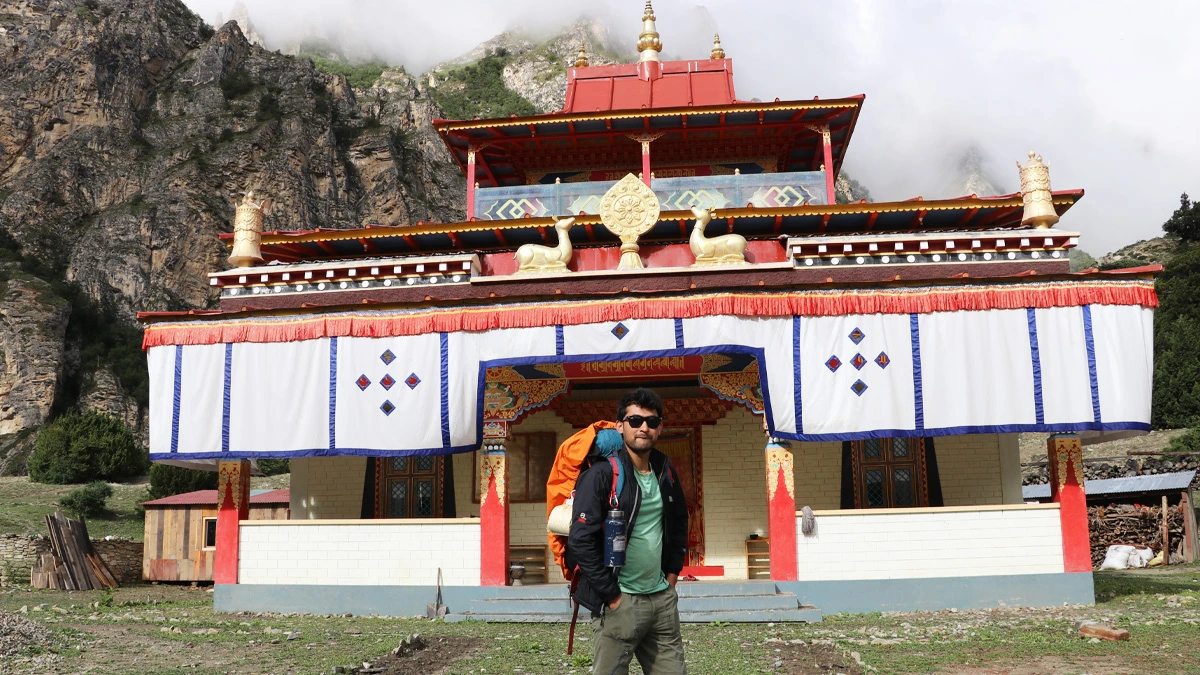
Standing in front of Satya Gumba at Nar Phedi
Even today, major decisions happen inside the monastery. Often guided by wisdom passed from generation to generation. Tradition is not only practiced, but it remains the core identity of Nar Phu heritage.
A Local Moment: Morning Tea in Phu
I still remember the morning tea in Phu with yak herders. The air was cold, the wind silent, and the first sunlight touched the mountains. A herder poured steaming butter tea into a wooden bowl and smiled without many words.
Further, we sat near the yak pens, watching the animals wake up. He told me about long journeys to Tibet, snowstorms near Kang La, and the pride of keeping yaks alive. That tea tasted like the whole valley- simple, strong, and full of history.
Our Responsibility to Respect Their Culture
Visitors have a duty to protect the fragile soul of the Nar and Phu valley culture. Respect begins with small actions. Just ask before entering homes, speak kindly, observe religious spaces quietly, and never take photos without permission. Buy local products, eat local food, and show appreciation for their simple lifestyle.
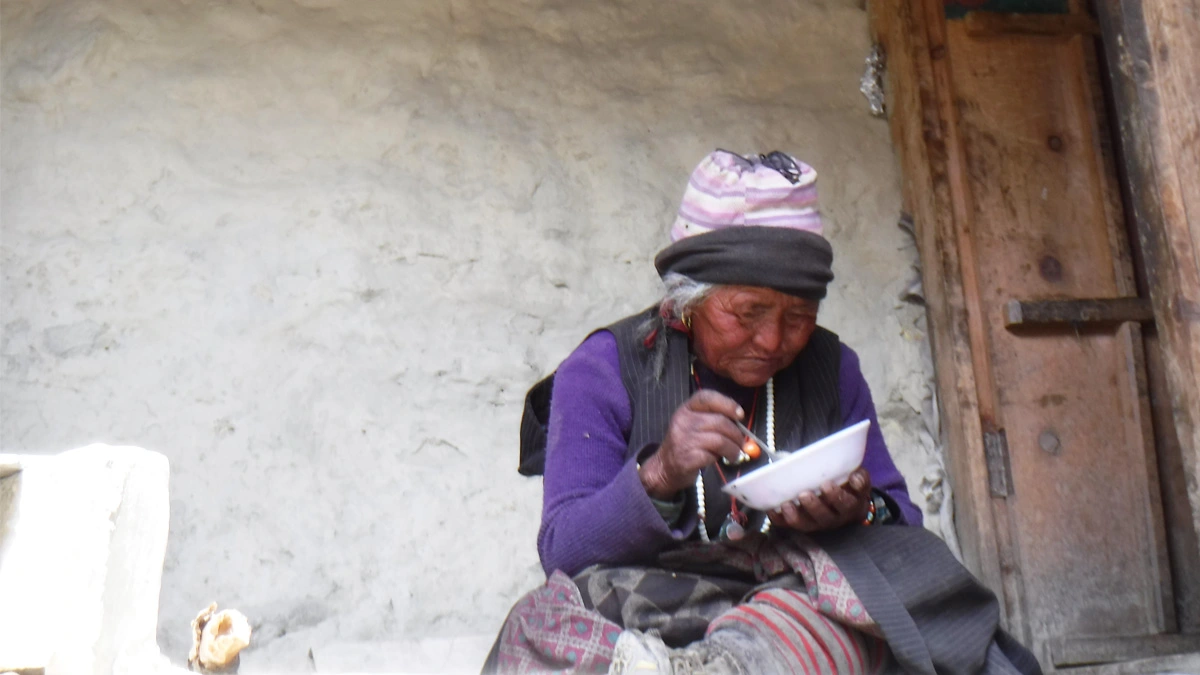
Old lady enjoying local food in Nar Phu Valley
Avoid loud music, littering, or pushing for modern comforts in places not built for tourism. The best way to honor Tibetan villages Nepal is to travel slowly, listen to stories, and support local families. Responsible travel ensures the valley’s traditions remain strong for future generations.
Final Thoughts
Nar and Phu are more than remote villages- they are guardians of Himalayan memory. Here, mountains protect stories of salt caravans. Similarly, wedding songs echo against cliffs, and ancient monasteries still guide daily life. Travelers who walk with respect, patience, and curiosity discover something rare in today’s world: a culture untouched by time.
FAQs
What makes the Nar and Phu valley culture unique?
This Trek preserves ancient Tibetan heritage with medieval architecture, yak herding, remote monasteries, and festivals unchanged for centuries. The villages still follow Himalayan Buddhist culture and seasonal mountain traditions.
Are Nar and Phu Tibetan villages in Nepal?
Yes. These are considered authentic Tibetan villages in Nepal. Their language, architecture, religion, food, and lifestyle come directly from old Tibetan culture. Mostly brought through the historic salt trade route.
Step into true Himalayan isolation. Watch our full Nar Phu Valley Trek video and explore ancient culture, remote valleys, and dramatic mountain scenery with Breeze Adventure.
What is the heritage of Nar Phu Valley?
Its heritage is shaped by the Tibetan Buddhist faith, ancient trade with Tibet, and stone-built medieval settlements. Similarly with seasonal yak caravans. Local traditions continue without commercial tourism influence.
Which monasteries are in Nar Phu Valley?
The most sacred monastery is Tashi Lhakhang in Phu. It is located above the village on a dramatic cliff, blessed by the Karmapa lineage. And used for community gatherings, festivals, and spiritual decisions. And there is another monastery, Satya Gumba at Nar Phedi.
What festivals are celebrated in Nar and Phu?
The main festivals are Yartung in August and Lhosar (Tibetan New Year) in February–March. Yartung features horse racing, music, and yak caravans returning from high pastures. Lhosar brings prayers, butter tea, and family gatherings.
What is the history of the salt trade in Nar Phu?
Nar and Phu were part of the ancient salt trade route linking Nepal and Tibet. Yak caravans carried salt, wool, and butter across high passes in exchange for grains and spices from lower valleys.
Can travelers visit monasteries in Nar Phu?
Yes, visitors can enter monasteries like Tashi Lhakhang with permission. Respect local customs: remove shoes, stay quiet during prayers, and avoid flash photography inside the sacred hall.
How to respect the Nar and Phu valley culture?
Be humble and ask before entering homes, taking photos, or walking into monasteries. Support local families by eating and staying in village homes. Avoid loud behavior, littering, and pushing for modern comforts.
Is Nar Phu culturally similar to Upper Mustang or Dolpo?
Yes, all three regions share Tibetan Buddhist culture, monasteries, and ancient trade history. However, Nar and Phu feel more remote and less commercial compared to Mustang and Dolpo.
What religion is practiced in Nar and Phu?
The valley follows Himalayan Buddhist culture, guided by monastery traditions. Likewise, seasonal blessings and community rituals honoring mountains, water, and ancestors.
Kishwor Adhikari is a passionate writer with a deep enthusiasm for trekking and adventure. His extensive travels across Nepal, exploring its diverse landscapes and hidden corners, have shaped his unique perspective on the country's natural beauty. With a wealth of first-hand experience in adventure trekking, Kishwor has become a trusted voice for fellow enthusiasts. Through his writing, he shares invaluable insights, offering practical advice and inspiration for both seasoned trekkers and novices alike. His dedication to sharing his journey and knowledge helps others discover the wonders of Nepal's wilderness, making his work an essential resource for anyone seeking adventure in the region.