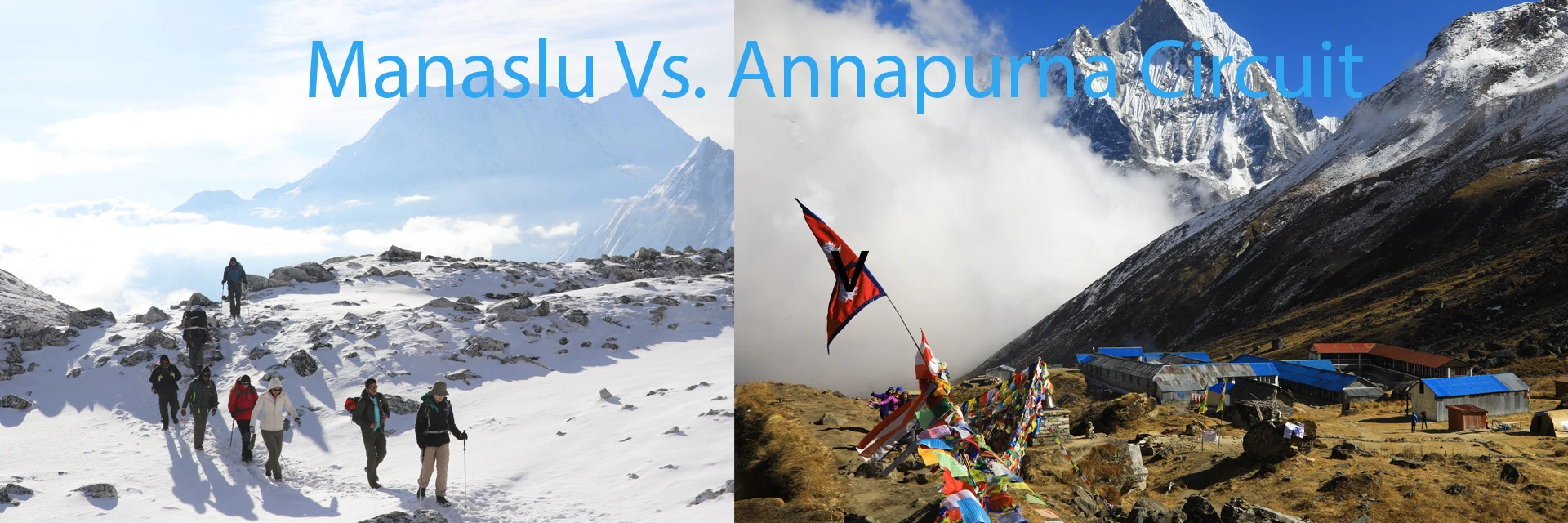
Picking between Manaslu and Annapurna is not easy, honestly. You’re standing there, thinking, which way do I go? Both take you deep into the Himalayas, and both are tiring. And both show mountains and villages that just make your jaw drop. I’ve done both, and wow, each one feels totally different.
Manaslu is quiet, kind of like you’re on your own little adventure, raw, few people, all nature. Annapurna is more lively, with teahouses everywhere, small towns, lots of trekkers, and a social vibe all around. Culture, rivers, mountains, it’s all stunning, no matter what. So yeah, it really depends on what kind of trek you want, peaceful and quiet, or busy and connected.
Table of Contents
Quick Summary: What Each Trek Offers
Manaslu: remote, peaceful, feels like an expedition, very raw, with fewer crowds.
Annapurna: social, teahouses everywhere, easier access, still amazing views, more people.
Both are beautiful, both challenging, both unforgettable. It’s just your style that decides.
Manaslu Circuit Trek Overview
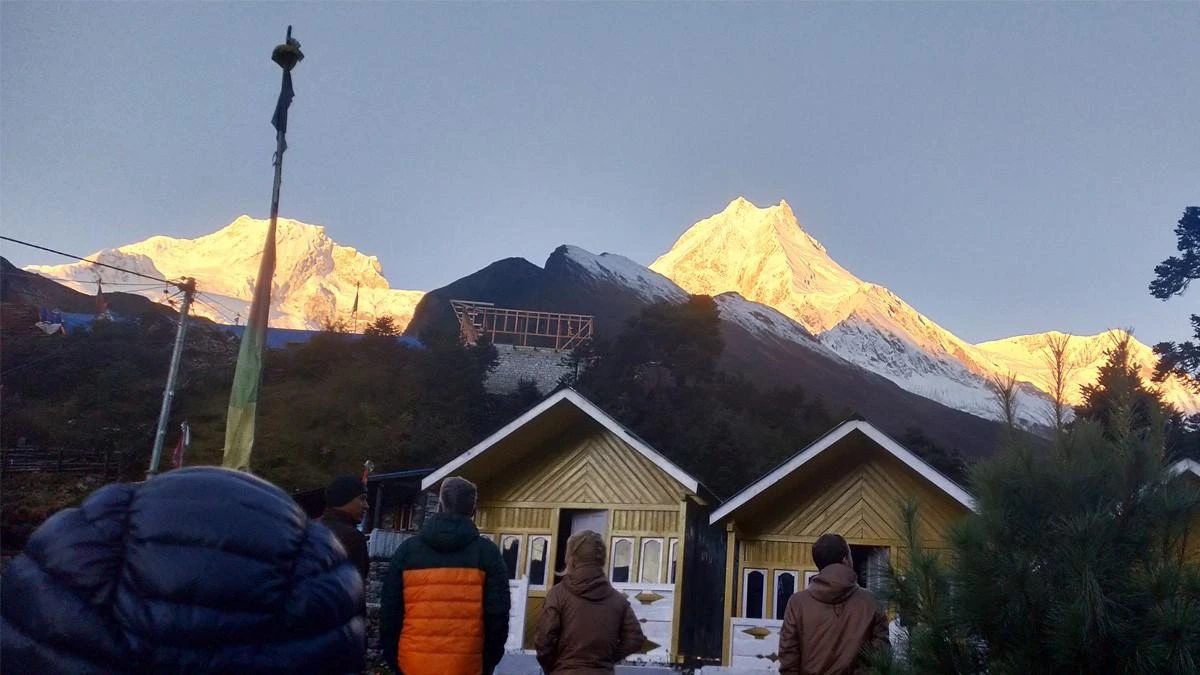
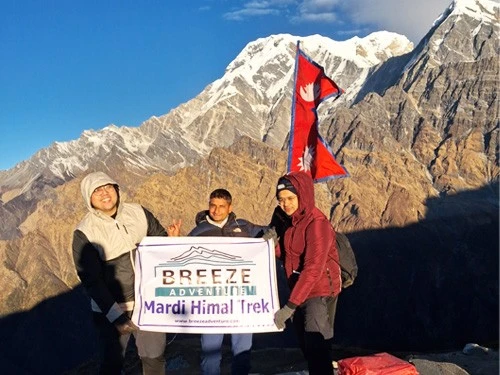
Trekkers enjoying Manaslu mountain views
The Manaslu Circuit Trek is often described as “what the Annapurna Circuit used to be 20 years ago.” Remote, rugged, and far from the crowds, it takes you around Mount Manaslu (8,163 m), the 8th highest mountain in the world.
Circles Mount Manaslu (8,163 m), the world’s 8th highest peak
Offers raw Himalayan wilderness, Tibetan-influenced culture, and pristine monasteries
Annapurna Circuit Trek Overview
The Annapurna Circuit Trek is a world-famous trail that revolves around the Annapurna Massif. Once considered the “trek of all treks,” it remains incredibly popular thanks to its cultural variety, sweeping views, and flexible logistics.
Annapurna = classic, diverse, more facilities, larger crowds.
Landscape & Scenery Differences
Manaslu Landscape & Scenery
From the first step you take, Manaslu feels like it’s calling you, like adventure is just waiting. The trail goes along the Budhi Gandaki river, bridges sway, water roaring so loud, cliffs just huge on both sides.
Forests at first, pine and rhodo, then slowly gone, replaced by big open pastures. Villages pop up, Namrung, Lho, stone houses on hills, terraces everywhere. And above Lho, Manaslu itself, wow, looks even bigger than 8,000 meters, really crazy.
Go higher, Sama Gaon, Samdo, yaks everywhere, prayer flags fluttering, monasteries all around. Culture here is very Tibetan, mani walls, stupas, chortens, everywhere you look. Larkya La Pass is unforgettable, with peaks like Himlung, Cheo Himal, and Annapurna II all around. You just stand there, can’t believe it.
Wilderness: It all begins in subtropical forests, following the Budhi Gandaki River through narrow gorges. Then, past waterfalls and over suspension bridges.
Cultural villages: Experience Tibetan-influenced hamlets like Sama Gaon and Samdo. Complete the day with yak pastures and charming stone houses.
Glaciers & passes: Get up close with the Manaslu Glacier and enjoy panoramic views from the Larkya La Pass.
Less road influence: The trails remain remote, with very limited vehicle access.
This Manaslu Circuit Trek video is recorded during real guided treks, showing authentic Himalayan culture and landscapes—not staged scenes.
Annapurna Landscape & Scenery
Annapurna Circuit literally has the scenery that just blows your mind, all sorts of contrasts. First few days near Besisahar, you’re walking through rice terraces, waterfalls, forests, very green and alive. Then you go up into Manang Valley, the trees change to alpine, and mountains like Annapurna II, III, and Gangapurna just stare at you.
By the time you hit Manang village, everything feels kinda Tibetan. There will be side trips to Ice Lake or Tilicho Lake. Just unreal views, like you’re in another world.
After Thorong La Pass, the trail drops into dry, desert-like Mustang, wind-carved cliffs, gompas everywhere, and Muktinath is like a holy, mystical place. Feels so different, like another country, totally mind-blowing, and you just can’t stop looking around.
Variety of landscapes: From rice terraces and subtropical forests to arid Mustang’s desert-like valleys.
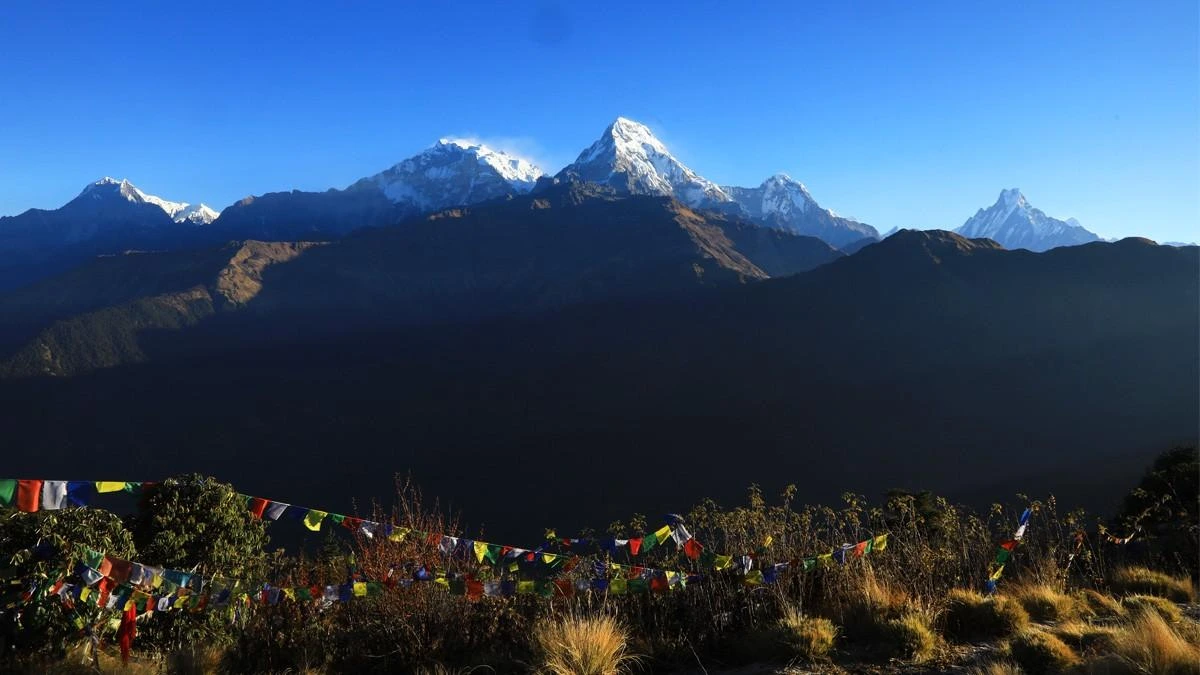
Stunning scenic beauty in Annapurna Circuit Trek
Mountain views: Annapurna I, Annapurna II, Annapurna III, Gangapurna, Tilicho Peak, and Dhaulagiri.
Lakes & side trips: Tilicho Lake (4,919 m) and access to Upper Mustang for extensions.
More developed: Some lower sections are now affected by jeep tracks.
In short
Manaslu = consistency of wilderness, deeply Tibetan influence.
Annapurna = diversity of ecosystems, jungle, alpine, desert in one trek.
Difficulty, Altitude & Technical Sections
Both treks require good fitness, but they challenge you differently.
Manaslu Circuit Trek Difficulty
Daily effort: Expect 6–8 hours of walking with steep climbs and descents. This defines the actual Manaslu trek difficulty.
Trail conditions: Some sections are exposed to landslides or narrow ledges, especially near Jagat and Deng.
Altitude: Acclimatization days in Sama Gaon or Samdo are essential. Many trekkers visit Manaslu Base Camp (4,800 m) or Pungyen Gompa as acclimatization hikes.
Pass crossing: The ascent to Larkya La Pass is long, and the descent can be brutal on the knees. The weather is unpredictable, with strong winds and snow possible.
Annapurna Circuit Trek Difficulty
Daily effort: Similar 6–7 hours trekking per day, but with better-maintained trails.
Trail conditions: More established paths with regular lodges for rest.
Altitude: The gradual ascent through Manang helps acclimatization. Many trekkers take a rest day here and hike up to Ice Lake or Gangapurna Lake.
Pass crossing: Thorong La (5,416 m) is slightly higher than Larkya La. The final push is challenging due to thin air, but thousands manage it every year.
In short
Manaslu is more rugged and remote, suited to trekkers who don’t mind fewer comforts.
Annapurna is tough but more forgiving, thanks to its infrastructure. The Annapurna trek difficulty is moderate and absolutely doable for everyone.
Crowd Levels & Seasonality
Manaslu: Quiet & Remote
On the Manaslu Circuit, you might go hours without seeing another trekking group. Lodges are quieter, trails are less busy, and nights are often spent with just a handful of fellow trekkers. In peak autumn, you’ll still find availability in most teahouses without advance booking.
Best seasons:
Spring (Mar–May): Clear mornings, blooming rhododendrons.
Autumn (Sep–Nov): Crystal skies, best visibility.
Winter: Silent and beautiful, but Larkya La may be closed.
Annapurna: Popular & Social
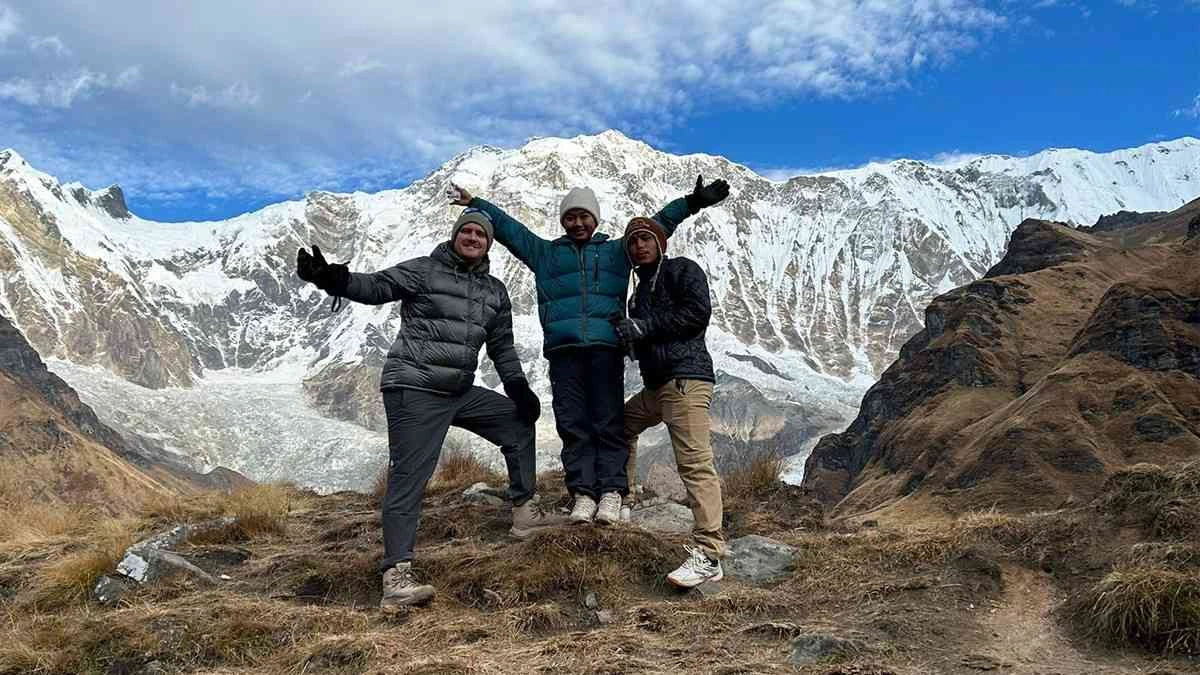
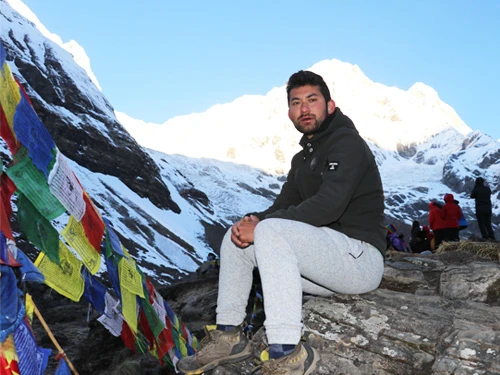
Trekkers cherising the moment in Annapurna Circuit
The Annapurna Circuit is far more popular. In October and November, the villages of Manang, Pisang, and Muktinath buzz with trekkers from around the world. It’s a great place to socialize, but if you’re looking for solitude, it may feel crowded. The best season for the Annapurna Circuit trek is the smart move for a greater experience.
Best seasons:
Spring: Warmer, colorful blooms.
Autumn: The busiest season, but spectacular.
Winter: Thorong La may close due to heavy snow.
Monsoon: Wet, but Mustang’s arid side offers rain-shadow trekking.
In short
Manaslu, if you want peace and quiet.
Annapurn, if you enjoy meeting fellow trekkers from around the globe.
Accommodation & Village Culture
Manaslu: Simple Hospitality
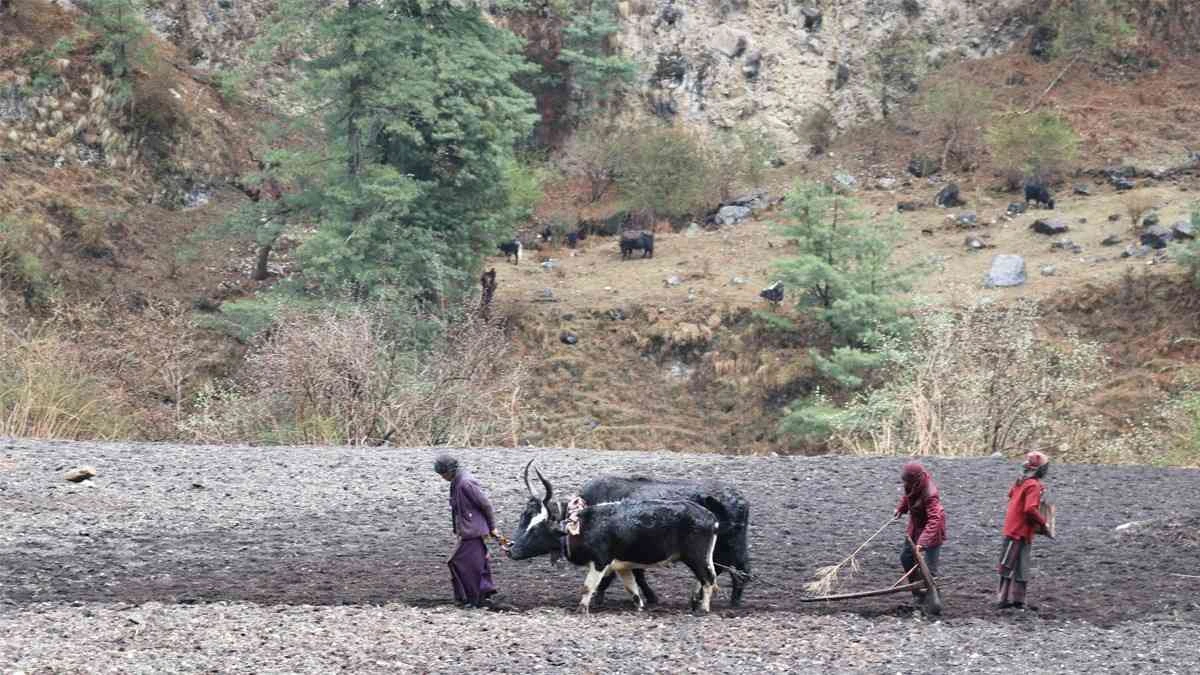
Locals using oxes for land cultivation in Manaslu Region
Manaslu Circuit, the lodges are super basic, like really simple. Wooden beds, shared toilets, dal bhat for dinner, and sometimes, if you’re lucky, a solar shower. But that’s the charm, it really feels real. In Samdo, locals with their yaks, spinning prayer wheels, same way they’ve done for years. Sama Gaon, villagers invite you in, monasteries look like time stopped there, really magical.
Annapurna: Comfort & Variety
Annapurna Circuit is a bit different, more comfy. In Manang, you can have apple pie, cappuccino, or even go to altitude lectures at the Himalayan Rescue. Muktinath, Jomsom, lodges with Wi-Fi, bakeries, hot showers, nice for breaks. Lodges go from simple to modern, so if you like comfort, Annapurna gives that while still having amazing views all around.
In short
Manaslu = rustic, authentic culture.
Annapurna = diverse comforts and social lodges.
Permits, Costs & Logistics
Manaslu Circuit Permits
Restricted Area Permit (RAP)
Manaslu Conservation Area Permit (MCAP)
Annapurna Conservation Area Permit (ACAP)
Because of the RAP, you must book through a registered agency and trek with a licensed guide. This makes logistics a bit pricier, but it keeps Manaslu quieter.
Annapurna Circuit Permits
Annapurna Conservation Area Permit (ACAP)
TIMS Card
Trekkers can arrange permits in Kathmandu or Pokhara and set off solo, which explains the circuit’s popularity. Breeze Adventure has a customized package including permits, and the company handles every criterion on behalf of trekkers.
In short
Manaslu = more expensive, complex permits, requires agency.
Annapurna = cheaper, easier, allows solo trekking.
Which Trek Suits Which Traveler? (Decision Matrix)
Factor
Manaslu Circuit Trek
Annapurna Circuit Trek
Best for
Adventure seekers, culture lovers, solitude
First-time trekkers, social travelers, flexible itineraries
Permit rules
Restricted area, guide mandatory
Easier permits, solo with a guide allowed
Scenery
Tibetan villages, glaciers, wilderness
Rice terraces, alpine, desert-like Mustang
Difficulty
Rugged, remote, fewer facilities
Challenging but better supported
Accommodation
Basic teahouses
Wide range, from basic to comfortable
Crowds
Low, fewer trekkers
High, very popular
Cost
Higher due to RAP + guide
Lower, budget-friendly
Duration
12–16 days
10–15 days
Both the Manaslu Circuit and the Annapurna Circuit are legendary, everyone talks about them. Opt for Manaslu if you want something off the usual path, full of Tibetan vibes, and a real challenge.
Annapurna, on the other hand, is more like a mix of crazy scenery, meeting people on the way, and lodges that are a bit comfy too.
What about the best part? Doesn’t matter which one you choose, the Himalayas will just blow your mind. Some people do Annapurna first and then can’t stop thinking about Manaslu. Others start with Manaslu, and suddenly, Annapurna is calling them back, always dreaming of the next trek.
Kishwor Adhikari is a passionate writer with a deep enthusiasm for trekking and adventure. His extensive travels across Nepal, exploring its diverse landscapes and hidden corners, have shaped his unique perspective on the country's natural beauty. With a wealth of first-hand experience in adventure trekking, Kishwor has become a trusted voice for fellow enthusiasts. Through his writing, he shares invaluable insights, offering practical advice and inspiration for both seasoned trekkers and novices alike. His dedication to sharing his journey and knowledge helps others discover the wonders of Nepal's wilderness, making his work an essential resource for anyone seeking adventure in the region.