Nepal, the land of the highest peak in the world, Mount Everest, is not just a place for the Himalaya; this is an ultimate destination for cultural tours and unique lifestyles. The country is also the birthplace of Gautam Buddha and the land that was never ruled by anyone in the past. Everyone should visit Nepal once in a lifetime to experience some of the finest things in the world.
Here's a good reason to finally commit: Nepal's Visit Nepal 2027 campaign is shaping up to be a genuinely useful opportunity. The government, along with tour operators and service providers across the country, is rolling out special deals for tourists traveling to places across the country. Lower costs, better packages, more organized access. It's the kind of thing that makes it easier to stop procrastinating.
So here's a bucket list of places to visit in Nepal that's actually worth keeping. These are the real places, with real context, organized by region so you can plan an actual trip.
Table of Contents
Places to Visit in Kathmandu, Nepal
Kathmandu, the capital city of Nepal, gets dismissed sometimes as just the entry point. This is the city you pass through before the real Nepal begins. That's a mistake. The capital has more to offer per square kilometer than anywhere else in the country. The Kathmandu Valley Sightseeing and cultural tour is the best thing to do here.
Try the following places in Kathmandu Valley:
Monkey Temple (Swyambhunath Stupa)
Believed to have been made around 460 AD, this religious place is famous by the name of Monkey Temple. It is a spiritual place with devotion of both Hindus and Buddhists. This is the best place to visit if you are in Kathmandu. It is also a UNESCO World Heritage Site.
It is located on top of a hill, from where you can see the view of the city and take photographs. There will be mantra chantings, butter lamps, monkeys playing around in trees, and many more activities. This is also a popular morning walk destination for locals.
Pashupatinath Temple
Pashupatinath is a Hindu temple built in the 5th century. It is famous for the four-faced Shiva Lingam and is the largest Hindu shrine in Nepal. Besides that, open-air cremation, shamanism, tantras, and shadhus are very fascinating things in this place.
This is also a UNESCO World Heritage Site known for ancient pagoda-style architecture. Based on the holy bank of the Bagmati River, the place is an absolute delight to watch.
Hanuman Dhoka Durbar Square
This is a major tourist attraction in Kathmandu. It is a palace of an ancient king, which is famous for its unique architecture. Due to the statue of the monkey god at the gate of the palace, it is called Hanuman Dhoka.
It is protected as a UNESCO World Heritage Site and is also the home of the living goddess Kumari. This is worth visiting to experience a unique Newari culture and street food.
Nagarjuna
If you want to hike in the Kathmandu Valley without catching a bus for two hours first, Nagarjuna is probably your best option. The trail runs through Shivapuri Nagarjuna National Park, starting from the main gate at Balaju. The whole thing takes two to three hours, depending on your pace. And the forest is thick enough that you forget you're minutes away from a capital city.
Along the route, there are stupas, caves, and a few quiet viewpoints. The caves have an odd stillness to them. Centuries ago, a saint named Nagarjuna apparently meditated here, and honestly, it's easy to see why. Don't expect a crowd. Most tourists skip this one entirely, which is exactly why it's worth going.
Best for: solo hikers, early mornings, people who want nature without logistics.
Chandragiri
Chandragiri Hill sits at around 2,500 meters, and getting to the top is half the experience. You can hike from Thankot, it's a full day, but not a brutal one. Instead, you can take the cable car, which takes maybe 20 minutes and gives you views of the valley that are genuinely hard to describe to someone who hasn't seen them.
At the top, there are the Bhaleshwor Mahadev temple, a small amusement park (kids love it), and a resort if you want to stay the night. It works well for families because there's genuinely something for everyone. The hike up, though, if you have the time, take the hike.
Chobhar
Chobhar is about 9 km from Thamel, which makes it one of the easiest half-day escapes in the valley. Most people ride out here on a Saturday morning for a picnic or a short bike ride along the gorge. The views of the valley from the hilltop are clear on most days, and Manjushree Park nearby is a calm, underrated spot.
It's not the most dramatic destination on this list. But sometimes you just want to get out of the city without a whole production, and Chobhar handles that job well.
Cable car in Chandragiri Hills Ktahmandu
Places to Visit in Bhaktapur
Bhaktapur is a small district that lies within the Kathmandu Valley. It is an absolute representation of ancient Newari culture. Here are some of the famous places to visit:
Bhaktapur Durbar Square
Bhaktapur Durbar Square is also an ancient palace of the king, which is now a UNESCO World Heritage Site. It feels like a different century. The medieval architecture, the pottery squares, the smell of dried fish and incense.
Actually, it's the kind of place where you look up from your phone and realize you've been standing in the same spot for 20 minutes just watching people go about their day. There's a small entry fee for foreigners, and it's completely worth it.
Changunarayan
The hike to Changunarayan starts from Telkot and covers some genuinely beautiful countryside, terraced fields, forested ridges, the kind of trail that makes you want to walk slowly. The endpoint is a UNESCO World Heritage temple devoted to Lord Vishnu. It's among the oldest temples in Nepal, with intricate woodwork and stone carvings that somehow survived centuries of earthquakes and monsoons.
You can plan for a full day if you have time. If you're based in Kathmandu, it's accessible enough that you don't need to stay overnight, but the walk back gives you a different perspective on the same landscape, which is never a bad thing.
Nagarkot
Nagarkot is famous for one thing above everything else: the sunrise. On a clear morning, you can see a mountain panorama that includes Langtang, Gaurishankar, and Dorje Lakpa, all lit up before the rest of the world wakes up. It's the kind of view that makes even non-morning people set a 5 am alarm without complaining.
The hike from Changunarayan to Nagarkot takes around four hours and is one of the more satisfying walks in the region. Alternatively, drive up in the evening, stay at one of the guesthouses on the ridge, and wake up for the sunrise without the hike. Both approaches work. The mountain view is the point either way.
Dolalghat
Dolalghat is about 43 km from Bhaktapur, roughly an hour and a half by motorbike on the Araniko Highway, which follows the Bhote Koshi River through some dramatic gorge scenery. Most people go rafting here. The Bhote Koshi is one of the steeper, faster rivers in Nepal, and the section near Dolalghat is the kind of white water that gets your attention.
If rafting isn't your thing, there are riverside resorts where you can spend the day doing nothing particularly useful besides moving water. After a long ride, that's also a valid plan.
Stunning view captured from Nagarkot
Places to Visit in Pokhara
Pokhara is where a lot of Nepal trips slow down. You arrive planning to stay two days, and somehow it becomes five. The combination of the lake, the mountains behind it, and the density of good restaurants and cafes along Lakeside creates this pleasant inertia. The adventure sports don't hurt either.
Phewa Lake
Phewa is the second-largest lake in Nepal and sits right in the middle of Pokhara. You can rent a rowing boat and spend a morning on the water, heading toward the Tal Barahi temple on the small island near the center. Cycling around the lake perimeter is a good half-day option, the road passes Danda Kot and eventually reaches the World Peace Pagoda on the hill above the southern shore.
The lakeside strip itself can get touristy and loud by evening. If you want the peaceful version of Phewa, go early. The water is still, the mountains are reflected in it, and there's almost nobody around.
Mahendra Cave
Pokhara has several limestone caves, and Mahendra Cave is the one that gets the most visitors. It is a narrow, low-ceilinged corridor with some decent stalactite formations inside. It's a 20-minute experience, not a half-day expedition, but it's genuinely interesting.
If you want a slightly different version, Bat Cave is nearby and slightly more claustrophobic. Gupteshwor Mahadev Cave has religious significance and connects to a waterfall. Fair warning for anyone who doesn't love tight spaces: these caves have narrow entry points and low ceilings in places. It's worth knowing before you go in.
Sarangkot
Sarangkot sits on a hill above Pokhara, about 30–45 minutes from the city center by motorbike. It's the main launch site for paragliding in Nepal, and on any clear morning, you'll see a dozen colorful chutes over the valley. A tandem paragliding flight runs around NPR 8,000–12,000 and takes about 30 minutes. Zip-lining and ultralight flights are also available from the same hill.
Even if you're not doing any of the adventure activities, the panoramic view from the top of the lake below, the Annapurna range behind it, is worth the ride up. Arrive at sunrise if you can manage it.
Boats in Fewa Lake Pokhara
Places to Visit in Lumbini
Lumbini Pilgrimage Site sits in Nepal's Terai, the flat lowland belt near the Indian border, and it operates on a completely different frequency from the mountains. The whole place is designed around quiet, wide paths through gardens. You can experience here the sound of monks chanting from temple courtyards, and the smell of incense and marigolds.
It is, by most accounts, the birthplace of Siddhartha Gautama, the historical Buddha. That gives Lumbini a weight that most UNESCO World Heritage sites don't quite have. Buddhists from across Asia make the pilgrimage here. Even if you're not Buddhist, it's worth a day.
Mayadevi Temple
The Mayadevi Temple sits at the center of the Lumbini complex, built on the spot where Gautam Buddha is believed to have been born. Archaeological excavations here turned up a marker stone and structural remains dating to the 3rd century BC, which pushed back the confirmed date of the Buddha's birth.
The current temple structure is modern, but what's preserved inside, the ancient brick ruins and the nativity sculpture, is quietly extraordinary.
Around it: the eternal flame, the Ashoka Pillar (more on that below), a sacred garden, and a reflecting pool that the complex was designed around. Give yourself at least two hours here. It's not a place to rush through.
Ashokan Pillar
The pillar was erected by the Indian emperor Ashoka around 250 BC, during his pilgrimage to Lumbini. It records, in Brahmi script, that Ashoka visited this place, confirmed it as the birthplace of the Buddha, and granted tax reductions to the surrounding village. It's one of the oldest surviving inscriptions in South Asia.
It doesn't look dramatic. It's a stone column surrounded by a small metal fence, with prayer flags tied nearby. But knowing what it is, a 2,300-year-old physical record of a historical visit to a place that mattered even then, makes it worth standing in front of for a few minutes.
Lumbini Museum
The museum is a 30-minute walk from the Mayadevi Temple. The collection covers Buddhist art and artifacts from across Asia, sculptures, manuscripts, coins, and ritual objects donated by countries from Japan to Germany to India. It's well-organized, and the exhibits are labeled in English.
The setting is nice: the museum sits beside a small pond surrounded by well-kept gardens. If you're visiting Lumbini in late afternoon, this is a pleasant way to spend the final hours before the light fades.
Mayadevi Temple in Lumbini is one of the best places to visit in Nepal
Places to Visit in Chitwan
Chitwan is the best place to visit in Nepal. This should be on your bucket list, as it is a destination where you go to see animals that most people in Nepal's mountain cities have never seen in the wild. There are one-horned rhinos. Similarly, Royal Bengal tigers, if you're lucky and patient. Gharial crocodiles basking along riverbanks are a delight to see.
Further, the national park here is one of the best in South Asia, and the lodges around it have figured out how to do wildlife tourism properly.
Chitwan National Park
The park covers 932 square kilometers of sal forest, grassland, and riverine habitat along Nepal's southern border. For tourists, the main access points are the towns of Sauraha and Bharatpur.
Activities run the full range: jeep safaris in the jungle (best for covering ground and spotting rhinos), elephant-back safaris (more immersive, now limited due to conservation concerns), canoe trips along the Rapti River, and guided walking safaris for those who want to be genuinely in the forest.
Elephant bathing experiences, where you help wash the park's elephants in the river, are popular and surprisingly moving. You can also visit the elephant breeding center, where calves at various stages of development are kept. Early morning is the best time for almost everything in the park. Animals are active, light is good, and the river mist hasn't burned off yet.
Try 2 nights 3 days Chitwan Tour Package for the best wildlife and cultural experience. Tharu culture, unique lifestyle, and local food are major attractions besides animals and jungle safari.
Bishazari Taal
Bishazari Taal, "twenty thousand lakes", is an oxbow lake complex near Bharatpur, formed over centuries as the Rapti River shifted its course. It's primarily a birdwatching destination, and a serious one.
During summer, migratory species from Europe and Central Asia stop here in numbers that make it worth bringing binoculars. Resident birds include several kingfisher species, storks, herons, and, in the right season, the rare Bengal florican.
The walk around the lake periphery also turns up occasional reptile and mammal sightings, gharials, spotted deer, and sometimes a rhino at the water's edge. It's a quieter, slower experience than the national park, which is exactly why it works.
Chiraichuli Hill
At around 950 meters, Chiraichuli is the highest point in the Chitwan district. The road to the top branches off the Prithvi Highway, and you can drive or ride a bike most of the way before a short walk to the summit.
The views on clear days stretch north to Dhaulagiri, Manaslu, and Gaurishankar, mountain peaks above the flat Terai that feel almost surreal from this angle.
It's a good sunset or sunrise spot, and less visited than it deserves to be.
Rhinos in natural habitat in Chitwan National Park
Himalayan Trekking
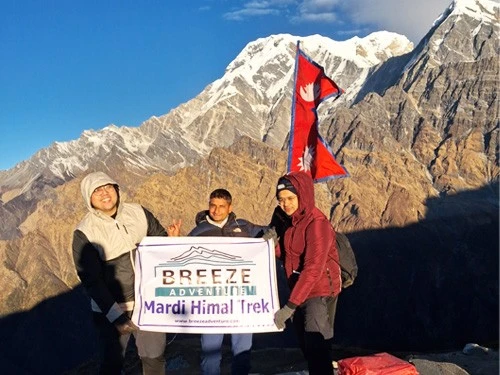
Mountain Trekking should definitely be on your bucket list for visiting Nepal 2027. Nepal is home to the world's highest peak, Mount Everest. Besides, it has more than 1300 mountains across the country, with 414 open to expeditions. Everest Base Camp Trek is the most loved destination by foreign trekkers.
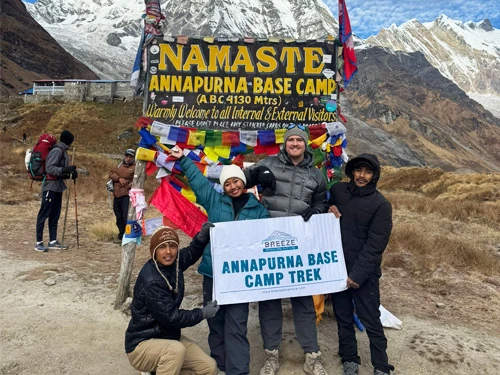
Similarly, Annapurna Base Camp has become the most popular in recent years. With developed infrastructure, this destination is growing as a bucket list for millions. Other popular trekking destinations include Manaslu Trekking, Kanchenjunga Trekking, Langtang Valley Trekking, Nar Phu Trek, and more.
A few practical notes before you go
Nepal's domestic flights connect Kathmandu to Pokhara (25 minutes), Bharatpur for Chitwan access, and Bhairahawa near Lumbini. Buses are cheaper and more scenic but significantly slower. The Kathmandu-Pokhara highway takes 6–8 hours on a good day.
Renting a motorbike is genuinely the best way to explore within regions, especially around Bhaktapur and Pokhara.
Budget travelers can move through Nepal on NPR 3,000-4,000 per day, including accommodation, food, and basic activities. Mid-range is comfortable around NPR 7,000–10,000. Neither requires spending more than that unless you're staying at lodges inside Chitwan National Park, which is in a different price bracket and worth it for at least one night.
The best time to visit Nepal is throughout the year. Unlike high altitude trekking in the Himalayas, city cultural tours, jungle safari, and overall Nepal tour can be done anytime. There is no best window to visit Nepal, it is open to visit throughout the year.
2027 is a good year to do this. The Visit Nepal campaign means operators are competing for your business. Take advantage of that, plan properly, and go. Breeze Adventure is set to create history with unbelievable tours and trekking packages this year.
Kishwor Adhikari is a passionate writer with a deep enthusiasm for trekking and adventure. His extensive travels across Nepal, exploring its diverse landscapes and hidden corners, have shaped his unique perspective on the country's natural beauty. With a wealth of first-hand experience in adventure trekking, Kishwor has become a trusted voice for fellow enthusiasts. Through his writing, he shares invaluable insights, offering practical advice and inspiration for both seasoned trekkers and novices alike. His dedication to sharing his journey and knowledge helps others discover the wonders of Nepal's wilderness, making his work an essential resource for anyone seeking adventure in the region.