Before you go on an expedition in the Annapurna range, you need to know the answer to questions like Why is Annapurna so deadly, or Why is Annapurna so dangerous. Knowing the answer to questions like why Annapurna is so deadly, or why Annapurna is so dangerous can help you have realistic expectations about the journey, and better prepare to face all the challenges.
why-is-annapurna-so-deadly
Table of Contents
While you might think that getting to know the truth, such as why Annapurna is so deadly. You might scare a lot of climbers and make them change their decision to climb Annapurna, but it’s not so. Every climber who seeks to climb a peak, whether it be Annapurna or some other mountain, makes sure to research well. Also, they find the answer to the question Why is Annapurna so deadly. It is facts such as these that make the climbers aware of what’s coming their way and get them excited.
Undoubtedly, Annapurna is one of the most dangerous mountains to climb in the world. But the fact that so many climbers come to Nepal to give it a try is proof that while they tend to research and find out the answer to the question. Like, why is Annapurna so deadly? It doesn’t intimidate them as much. Rather, it makes them want to go on the Annapurna Expedition even more.
Annapurna Expedition
Annapurna is one of the most amazing mountains to climb in the world. It is a range of peaks that spans a distance of around 60 km. The highest peak in the range is named Annapurna I, which has a height of 8091 m. Generally, it’s the same peak that the mountaineers climb. It’s beautiful, it’s majestic, and it offers you all the challenges that you can get your hands on.
Altogether, the Annapurna Expedition is a 56-day-long journey. It includes 36 days of core climbing, 13 days of core trekking. And the rest of the days are spent relaxing, moving around, or traveling. Apart from the main mountain and the different base camps on it, you’ll cover villages like Marpha, Beni, Lete, Ghasa, and Jomsom during your journey.

Annapurna's Death Toll: The Numbers Behind the Reputation
Annapurna I holds a distinct place in mountaineering history: when Maurice Herzog and Louis Lachenal reached its summit in 1950, it became the first 8,000-meter peak ever climbed by humans, three years before Everest was summited. Herzog paid a brutal price for that achievement, losing most of his fingers and toes to frostbite on the descent.
That legacy of danger has never really faded. For decades, Annapurna's fatality-to-summit ratio hovered between 32 and 40 percent, meaning roughly one in three climbers who attempted it never made it back down. For comparison, Everest's fatality rate in modern guided expeditions has dropped to around 1 percent thanks to fixed ropes, established camps, and Sherpa support infrastructure, while K2 sits in the mid-teens percentage-wise. Even as forecasting, gear, and route knowledge have improved in recent years, Annapurna still ranks among the deadliest peaks in the world to attempt.
Much of that reputation traces back to the mountain's infamous South Face, a near-vertical wall of rock and unstable ice rising over 3,000 meters, first climbed in 1970 by a British expedition in what's still regarded as one of the boldest ascents in Himalayan mountaineering history.
Why Is Annapurna So Deadly
Despite being the 10th highest peak in the world, Annapurna is among the hardest to climb. Certain sections are considered even more technically demanding than K2, Manaslu, or Everest. It's also considered one of the most fatal mountains on the planet, with a historical fatality rate around 40 percent the highest among all the 8,000-meter peaks.
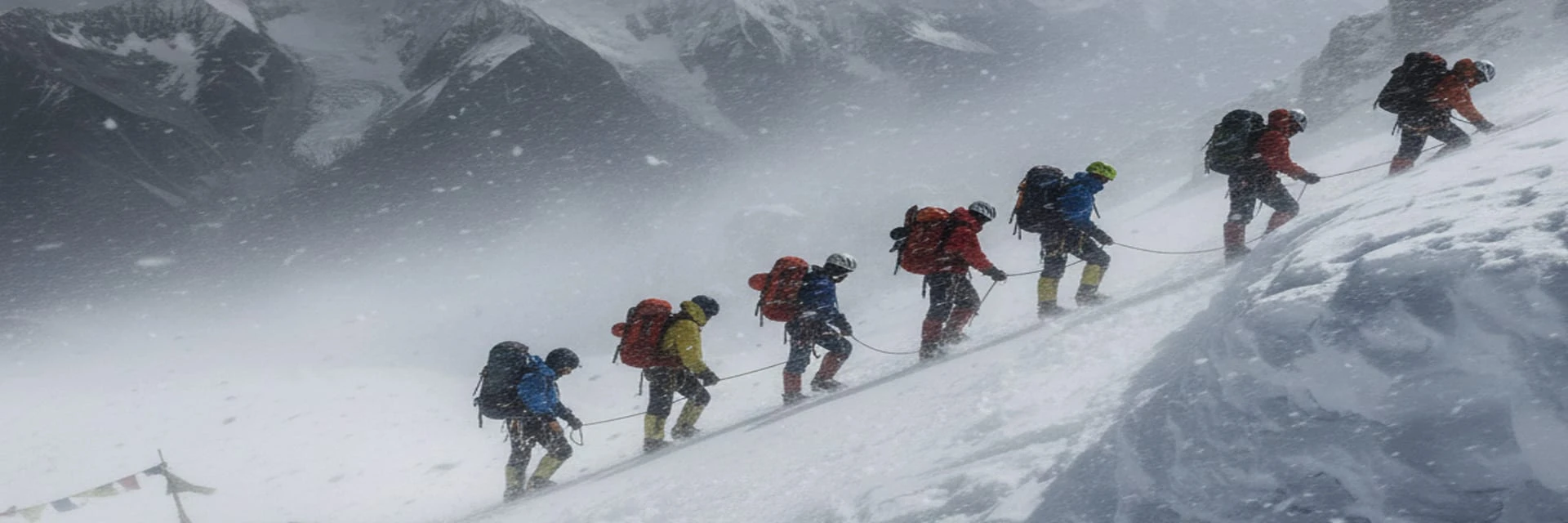
One reason for this is the mountain's unpredictable climate. Annapurna stays cold and snow-covered year-round, and can receive high-velocity wind and snowfall in any season, making climbing genuinely difficult and dangerous. Many climbers have fallen victim to sudden shifts in weather, sometimes fatally.
Annapurna is also full of seracs, crevasses, and sharp ridges. Crossing these sections is inherently risky, and the constant chance of avalanche or falling ice adds another layer of danger that has claimed many lives over the decades.
Unlike more heavily trafficked peaks such as Everest, the Annapurna range is remote and secluded, which makes timely rescue difficult when something goes wrong. The local population is also less involved in mountaineering support compared to regions like Khumbu, so there's less immediate human help available during emergencies.
Between the unpredictable weather, the technical terrain, and the difficulty of getting help when things go wrong, it's easy to see why Annapurna has earned its reputation as one of the most dangerous mountains in the world to climb.
Annapurna Circuit Trek
If mountaineering-level risk isn't what you're after, the Annapurna Circuit Trek lets you experience the same range without the technical climbing. For travelers who want the comfort-focused version of this journey, our Luxury Annapurna Circuit Trek starts with a scenic helicopter flight from Kathmandu straight to Chame, skipping the long road journey before trekking through Manang and Yak Kharka, crossing the legendary Thorong La Pass, and returning via mountain flights from Jomsom to Pokhara and Kathmandu. Accommodation includes the Kathmandu Marriott and the best available lodges along the trail, making it one of the more comfortable ways to take in the Annapurna region.

Annapurna Circuit Trek Difficulty
The classic Annapurna Circuit Trek is rated challenging, runs around 19 days, and takes you over Thorong La, a mountain pass at 5,416 meters — one of the highest points you'll reach anywhere in Nepal on foot. High altitude brings extreme weather, cold temperatures, and a real risk of altitude sickness, all of which push the difficulty level into the strenuous range.
Our luxury version condenses this into an 11-day itinerary by replacing the longest road and walking sections with helicopter and flight transfers, while keeping the same acclimatization stop in Manang and the same crossing of Thorong La. Whichever version you choose, understanding the difficulty level ahead of time helps you prepare properly.
Annapurna Circuit Trek Guide
Whichever version of the Circuit you choose, going with an experienced guide is strongly recommended — and for Nepal's national park routes, it's mandatory. A good guide keeps you on the right path, watches for signs of altitude sickness, and helps keep morale up on the tougher days.
Annapurna Base Camp Trek
If you'd rather skip Thorong La altogether, the Annapurna Base Camp Trek is a gentler alternative that still delivers close-up views of the Annapurna range, along with a stop at Machapuchhre Base Camp. It's rated moderate in difficulty, making it accessible to both novice and experienced trekkers, and the best seasons to go are spring (March–May) and autumn (September–November) when skies are clearest.

Nar Phu Valley Trek
Nar Phu Valley trek is similar to the Annapurna Base Camp trek in a lot of different ways. From trek duration to the region and attractions, and so on. Both treks even share a section of their trail. The major attraction of the Nar Phu Valley trek is the villages of Nar and Phu.
The villages are divided by a pass called Kang La, situated at an altitude of 5320 m. Nar Phu Valley is known for its religious significance.
During the trek, you will come across numerous Buddhist structures like chortens, stupas, manis, and so on. And the most prominent ones among them are Satek Monastery and Tashi Lakhang Monastery.

If you're set on climbing Annapurna itself, know that it's one of the most demanding peaks in the world to summit which is exactly what makes it such a significant achievement for those who do. Just make sure you go in with your eyes open: understand the risks, train properly, and work with an experienced team.
Not planning to summit Annapurna I yourself? Most people who land on this page are drawn to this range for its beauty, not its danger and the good news is you don't need mountaineering experience to experience it. Our 11-day Luxury Annapurna Circuit Trek takes you through the same massif in comfort, no technical climbing required. And if you are eyeing a future 8000m expedition, many climbers use treks like this as part of their acclimatization schedule before attempting the big peaks.
You might also be interested to know about:
Breeze Adventure is known for offering the best travel-related services in Nepal. They have packages focused on several activities. Such as trekking, expeditions, helicopter tours, mountain flights, and other kinds of luxury tours. They feature the most popular and off-the-beaten-path tourist destinations. In countries like Nepal, Bhutan, and Tibet. What makes their services the best is their openness and their supportive attitude.
They will answer all your questions. Even the ones like why Annapurna is so deadly. And ensure that you make the right decision when it comes to choosing and modifying your itinerary. If you’re looking to go for a holiday in any of these countries, or the Annapurna Expedition itself, make sure to choose Breeze Adventure as your travel partner. With them by your side, your vacation will never be the same.

Kishwor Adhikari
Call us on WhatsApp+977 9851045078OrChat with us