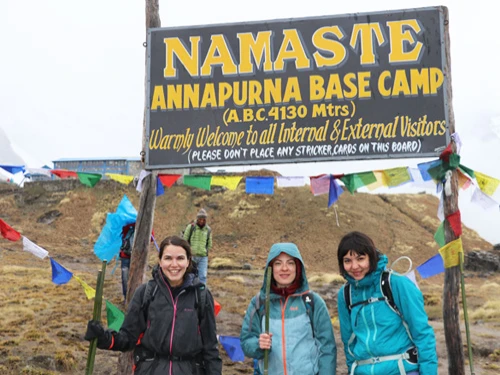
With the winter almost gone and monsoon yet to arrive, February is the prodigious time for visiting Nepal. Nepal in February welcomes the warmth of spring and reflects the beauty of the mountains at their best. While the mountain vistas are still covered in a thick layer of snow, the trekking trails are all dry.
When you see the world around you covered in a white blanket of snow, you realize the true beauty of nature. The sky is always clear, and the views are more than fantastic. In fact, the views of the Himalayan range are even more beautiful than the peak season of autumn. Doesn’t that sound wonderful? It definitely does.
After the freezing cold of winter, the high-altitude trekking trails are just ready to welcome the new trekkers. While international travelers are yet to arrive in large numbers, you can enjoy nature all by yourself. Also, February in Nepal is a great time for low-altitude trekking, jungle safaris, mountain biking, and other adventures. February celebrates major festivals like Shivaratri and sometimes Holi as well. So, are you ready to explore the best of Nepal this February?
Read on to find out why visiting Nepal in February is the best decision you can make.
Table of Contents
Nepal in February Weather
February is the last month of winter in Nepal, and the weather shifts noticeably across the month. Early February is still genuinely cold, with frosty mornings and chilly nights. By mid-to-late February, days turn warmer and skies stay clear, which is why this is one of the best months of the year for mountain views. February is also a dry month, so rain is rare in the hills and snowfall at altitude is occasional rather than constant.
Because Nepal spans the tropical lowlands to the high Himalaya, the temperature you'll feel depends entirely on elevation. Here's roughly what to expect, region by region:
Terai lowlands (Chitwan, Bardia, Lumbini): warm, comfortable days around 24°C and cool nights near 8°C. Good for jungle safaris when the hills feel too cold.
Kathmandu Valley: sunny days around 21°C, cold mornings and evenings down to about 5°C. Clear skies most days.
Pokhara: mild and pleasant, roughly 22°C by day and 9°C at night, with sharp lake-and-mountain reflections on still mornings.
Mid-hill viewpoints (Ghorepani, Nagarkot, Pikey): cold at dawn but rewarded with some of the clearest sunrise panoramas of the year.
High altitude above 4,000 m (Everest and Annapurna base-camp routes): daytime around 6°C, but nights commonly drop to −6°C and lower as you climb. Mustang and Jomsom are colder and windier still, with lows near −12°C.
Destination Rainfall Max Temp Min Temp
Chitwan23 mm24°C8°C
Kathmandu18 mm21°C5°C
Pokhara35 mm22°C9°C
Jomsom41 mm4°C−12°C
Namche23 mm6°C−6°C
Daylight is shorter than in peak season — expect about 11 hours, with sunrise near 6:40 a.m. and sunset around 5:50 p.m. Plan an early start on trekking days so you finish before the afternoon cold sets in. Always check the local forecast for your specific trekking region in the days before you set off, since high-altitude conditions can change quickly.
Challenges of Trekking in Nepal in February
February trekking is very doable, but it isn't the same as the autumn peak season. Knowing the trade-offs helps you pick the right route and pack properly:
Cold nights at altitude. Above 3,500 m, lodge rooms are unheated and temperatures fall well below freezing after dark. A four-season sleeping bag and a warm down jacket are essential.
Snow on high passes. Crossings such as Thorong La, Cho La, Renjo La and Larke La can be snowbound or temporarily closed. They may require crampons, an experienced guide, and flexible timing.
Some high lodges close. Several tea houses at higher elevations shut for winter, so options for food and accommodation can be thinner on remote routes.
Lukla flight delays. Winter weather can disrupt flights to Lukla for the Everest region. Build a buffer day or two into your plan.
Short daylight. With around 11 hours of light, you'll want earlier starts and a headlamp on hand.
For most travellers, the simplest fix is to favour lower and mid-altitude treks in February — they stay open, the cold is manageable, and the mountain views are still excellent.
What to Pack for Nepal in February
Thermal base layers and several mid-layers for easy temperature control
A warm down jacket and a windproof outer shell
A four-season (−10°C or lower comfort rating) sleeping bag for high routes
Insulated, broken-in trekking boots plus warm socks
Crampons or microspikes if you're attempting high passes or base camps
Sunglasses and high-SPF sunscreen for snow glare at altitude
A buff or scarf and a mask for dusty lower roads
Gloves, a warm hat, and a headlamp
Enough Nepali rupees in cash, as ATMs are scarce on rural trails
Trekking in Nepal in February
Nepal is popular for its high-altitude trekking trails that offer thrilling adventure and majestic mountain views. But most of these trails are difficult to climb during peak winter. Thankfully, trekking in Nepal in February is absolutely possible and exciting. Some parts of the high Himalayas are still covered with snow in February. But experienced trekkers can easily climb to the top.
Popular treks like Everest Base Camp and Annapurna Base Camp are possible with the right kinds of preparation and special equipment (like crampons and axes). Other treks such as the Mardi Himal trek, the Langtang trek, and the Kanchenjunga South Base Camp Trek are also possible in February.
If you want to enjoy the stunning view of Everest without climbing to the base camp, Pikey Peak trek and Everest View trek can be your ideal options.
Similarly, trekking at a lower altitude, especially near the hills of Kathmandu and Pokhara, is fun in February. February offers a very clear view even from the lower altitude. Trek in Nagarkot, Sundarijal, and Namobouddha region around Kathmandu is popular.
You can also hike around Siklesh village, Dhampus, and Mohare Danda. A lower-altitude trek is a great opportunity to explore the local culture and tradition while enjoying the beauty of nature to the fullest.
Tours in Nepal in February
Besides trekking, Nepal is also known for its excellent sightseeing tours. Did you know that Nepal houses 10 UNESCO World Heritage sites? Kathmandu valley itself has 7 of those cultural heritages that you can explore within a couple of days. There are many places to visit in Nepal in February that are stunning.
You can walk to Phulchowki Hill, Kakani, Champa Devi, Shivapurii, etc, for the excellent mountain view. Pokhara, the best city of Nepal, is popularly known as the city of lakes. You can visit Phewa, Begnas, and Rupa Lake in Pokhara or enjoy adventurous games like Paragliding and rafting.
Pokhara also offers different caves, waterfalls, and cultural heritages. You can celebrate the festival of Shivaratri and Holi while exploring these beautiful cities.
You can enjoy a home-stay experience in the classic Gurung Villages like Ghale Gau, Siklesh, and Tangting. Also, you might want to visit Bandipur, a beautiful hill town located close to Pokhara. Other things to do in Nepal in February include Jungle safari, mountain biking, boating, rafting, etc.
Jungle safari tour in Chitwan or Bardia National Park is also fun during the month of February. Another fantastic tour in Nepal in February can be the Lumbini visit- the place of birth of Gautam Buddha. You can also enjoy excellent sunrise views and volunteer in one of the tea farms over Illam during February.
Are you planning to travel to Nepal in February? Check out these best itineraries
Are you planning to travel to Nepal in February? Then, it’s wise that you trek with well-planned itineraries. Since trekking in Nepal in winter comes with a lot of risks, especially during high-altitude treks, you need to be prepared for the worst.
It’s important that you keep your itinerary flexible and have the insurance to cover emergency cases. Here are some of our best itineraries for the Best trek in Nepal in February. Click here for more details
Annapurna Base Camp Trek
Annapurna Base Camp Trek is short and attainable even with the slightest effort, and yet, so rewarding. Mount Annapurna, Mount Machapuchhre, and Dhaulagiri are visible on the journey. Annapurna Base Camp Trek begins from Pokhara and takes you into the mountain landscape. Even during February, this is the best trek one can attempt, and witness the best of Nepal.
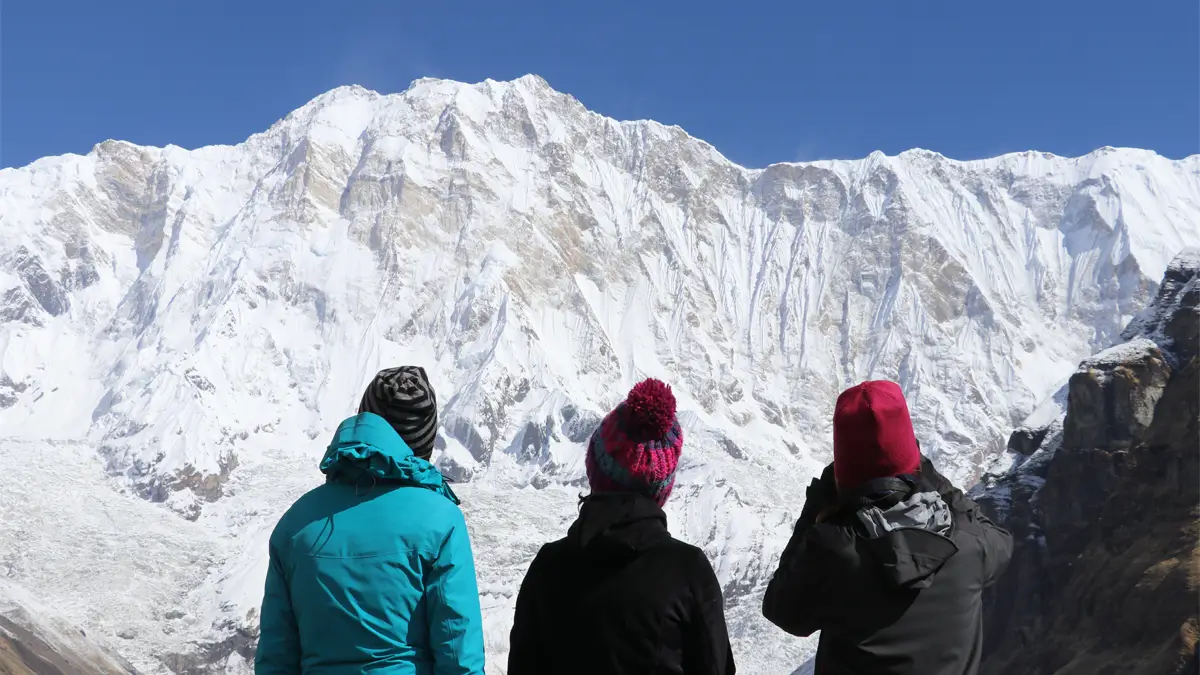
Team Breeze are enjoying the view of Mount Annapurna from ABC
Langtang Valley Trek
The Langtang Valley Trek is one of the most practical choices for February. It starts with a drive from Kathmandu to Syabrubesi rather than a mountain flight, so you avoid the winter flight delays that can affect the Everest region. The trail follows the Langtang River up through forest and Tamang villages to Kyanjin Gompa, with close-up views of Langtang Lirung and the surrounding peaks.
The valley stays accessible in February and the lodges remain open, though mornings are cold and higher viewpoints like Kyanjin Ri and Tserko Ri can hold snow. It's a good fit if you want real Himalayan scenery without a flight or extreme altitude, and it can be done comfortably in under a week. Pack warm layers for the chilly evenings at Kyanjin Gompa.
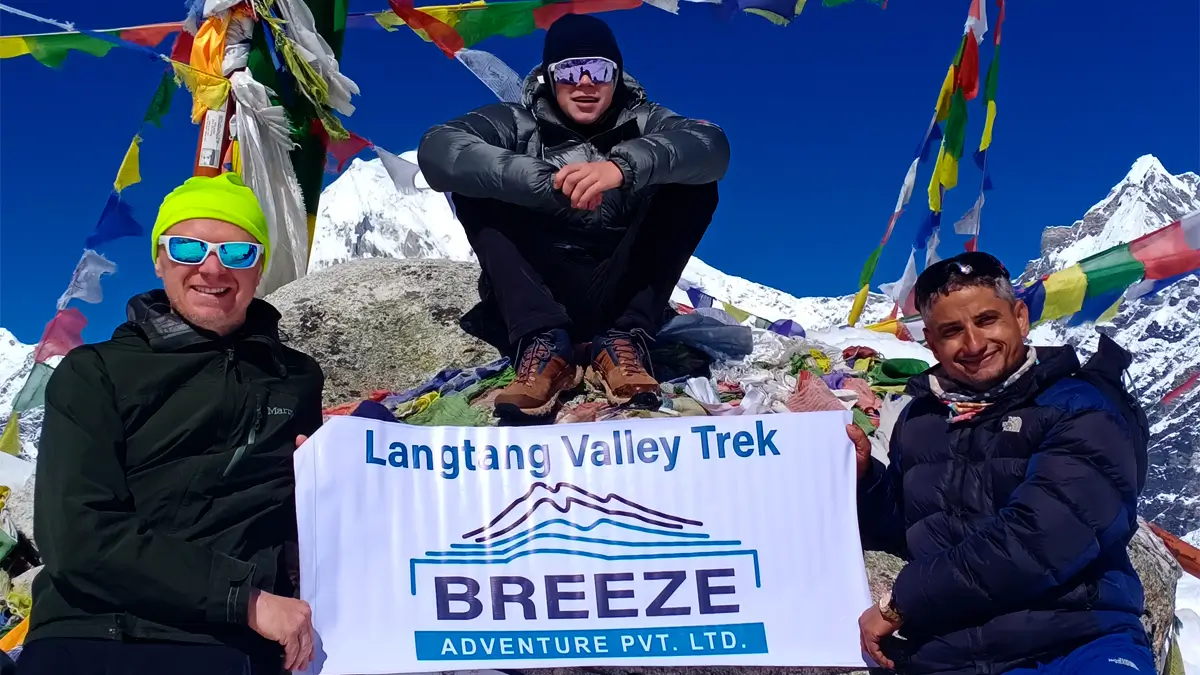
Team Breeze at Tsergo Ri on Langtang Valley Trek
Mardi Himal Trek
Mardi Himal is an unexplored gem in the Annapurna region. Only a few hundred trekkers have explored this beautiful Base Camp that is outstandingly positioned deep in the Annapurna region. The trek begins from Pokhara and takes you to a height of 4,500 m.
The Mardi Himal trek is easily achievable within a couple of days and is very fun to explore.
Everest View Trek
Everest View Trek is always a heavenly paradise. Trekking in the Khumbu region is a fun adventure and a lifetime memory where you get to witness Mount Everest, the world’s tallest mountain.
The trek begins with a flight to Lukla and then takes you to the Namche Bazaar. Including Everest, you can get amazing views of a dozen mountain peaks. Click here for more details
Kanchenjunga South Base Camp Trek
This trek is bestowed with a walk through the diverse landscape, culturally rich villages, and magnificent mountain views that will make your heart skip a beat. Trekking to Kanchenjunga South Base Camp in February can be a bit challenging, but with the right kind of preparations, it is more than amazing. Click here for more details
You might also attempt other lower-altitude treks without any major obstacles in February.
Nepal in February Travel Tips
Beyond packing the right gear, a few practical tips make a February trip smoother and more rewarding:
February is festival season, Shivaratri, Lhosar, and sometimes Holi all fall around this time. Join the local celebrations if your dates line up.
If you're worried about snow, favour lower-altitude treks, or pair your trip with warmer spots like Chitwan and Lumbini to escape the cold for a day or two.
Mornings and nights are cold in both villages and cities, so plan indoor downtime or warm cafés for the early evenings.
Skies are clearest in the mornings — get up for sunrise to catch the sharpest mountain views.
Carry enough cash in Nepali rupees for rural stretches, since ATMs are scarce on the trails.
Take time to talk with locals; it's the easiest way to understand the places and traditions you're passing through.
Frequently Asked Questions: Nepal in February
Is February a good time to trek in Nepal?
Yes. February brings dry weather, clear skies, and some of the sharpest Himalayan views of the year, with far fewer trekkers than the autumn peak. The main consideration is cold at higher elevations, so pack accordingly and choose your route to suit your experience.
How cold does Nepal get in February?
It depends on elevation. The Terai lowlands stay mild at around 24°C by day, Kathmandu and Pokhara are pleasant in the low 20s°C, but high-altitude areas regularly fall below freezing at night — about −6°C around Namche and as low as −12°C in Jomsom.
Which treks are best in Nepal in February?
Lower and mid-altitude routes are ideal: Annapurna Base Camp, Mardi Himal, Langtang, Ghorepani Poon Hill, Everest View, and Pikey Peak. The Kanchenjunga South Base Camp Trek is also possible with preparation. High passes carry more snow risk in winter.
Is the Everest Base Camp trek possible in February?
It is possible with the right cold-weather gear and preparation, but expect very cold nights, possible snow, some closed lodges, and the chance of Lukla flight delays. It suits experienced trekkers more than first-timers.
Does it snow in Nepal in February?
February is mostly dry, so heavy snowfall is uncommon. Occasional light snow can fall at higher elevations, which usually adds to the scenery rather than blocking lower trails.
How many hours of daylight are there in February?
Around 11 hours, with sunrise near 6:40 a.m. and sunset around 5:50 p.m. Starting early gives you time to reach your destination before the afternoon chill.
Conclusion:
Summing all up, February in Nepal is the last month of winter. As a result, the temperature in almost all parts of the country gets warm and stable. The low-altitude trek and all other tours around the country are fun in February. Even a major high-altitude trek is excellent due to dry weather and an absolutely stunning view.
But mountain regions can still be very chilly, and you need to be prepared to beat the cold. A Flexible Itinerary, warm clothes, and special trekking equipment can make trekking in Nepal in February achievable.
If you have any queries regarding trekking in Nepal in February, contact us or leave a comment below. We will be happy to guide you.
Kishwor Adhikari is a passionate writer with a deep enthusiasm for trekking and adventure. His extensive travels across Nepal, exploring its diverse landscapes and hidden corners, have shaped his unique perspective on the country's natural beauty. With a wealth of first-hand experience in adventure trekking, Kishwor has become a trusted voice for fellow enthusiasts. Through his writing, he shares invaluable insights, offering practical advice and inspiration for both seasoned trekkers and novices alike. His dedication to sharing his journey and knowledge helps others discover the wonders of Nepal's wilderness, making his work an essential resource for anyone seeking adventure in the region.